Multi-Camera vs. Single-Camera Event Coverage Tradeoffs
Multiple angles protect live moments from missed shots and create more content from one event.
Single-camera versus multi-camera event coverage is a choice about risk, content yield, and picture quality. One camera offers control, speed, and mobility, but loses every angle it cannot capture. Multiple cameras trade cost and coordination for protection against missed moments and more footage to reuse. The right choice depends on what cannot be lost and what must exist after the event.
Why a live event forces a structural choice, not just a technical one
A live corporate event gets one take. The keynote, award handoff, product reveal, or panel exchange happens once, with no reshoot for the camera that missed it. Whatever went unrecorded stays that way.
That makes camera placement part of the risk plan. A camera trained on the speaker protects the speech but leaves the audience reaction exposed. Another angle can protect that reaction, provided it is recording when the moment happens. The decision is therefore not simply which setup looks better, but which losses the event can tolerate.
What single-camera coverage actually controls and what it permanently gives up
With one frame to manage, the production can give composition, lighting, and movement undivided attention. Deployment is faster, logistics are simpler, and equipment overhead is lower. A solo operator can move through a trade show floor and follow candid moments that a locked-down rig cannot chase. In that setting, mobility is a real advantage.
The same strengths suit a 10-minute internal update, a founder’s weekly AMA on social, or a candid event highlight reel. These formats can value speed and authenticity more than overlapping coverage. A single camera is not merely the cheaper substitute for a bigger production. It can be the better fit for the job. Its advantage is strongest when the useful action follows one subject or when the deliverable does not need a complete record.
Holding on the speaker leaves the crowd’s response unrecorded. Swing toward the crowd, and the speaker’s expression disappears from the footage. An operator is more likely to miss unscripted reactions, sudden movement, and small visual details because they cannot always see them coming.
A 45-minute keynote can become visually repetitive within its opening minutes when the viewer has only one perspective. Editing then takes more work to maintain pace and hide gaps with limited raw material. An editor can shape what was captured.
How multi-camera coverage converts logistical complexity into editorial insurance
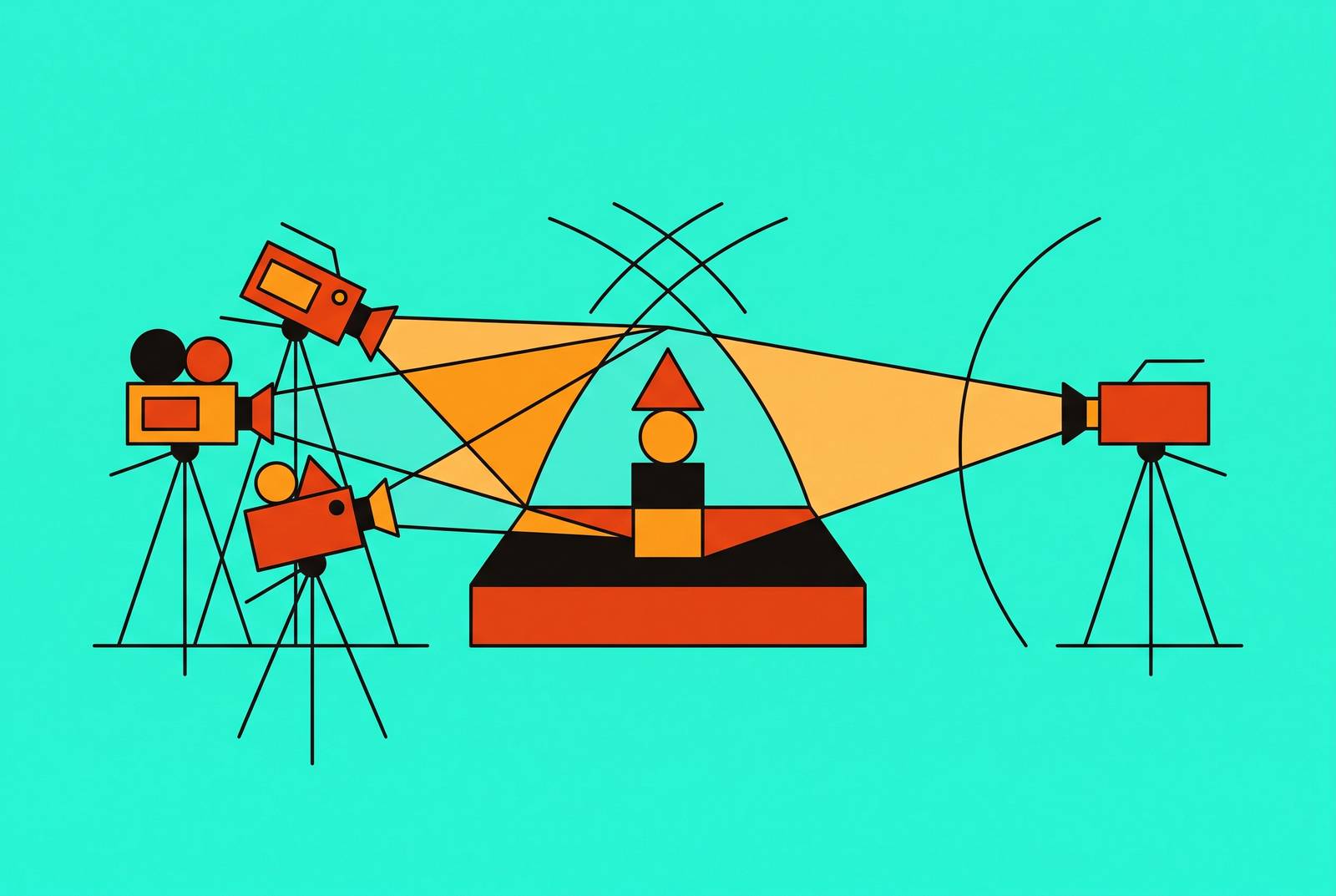
If a speaker steps out of the tight frame, someone crosses the lens, or a camera battery dies, another camera may still have a clean shot. The editor can cut to that view to fill the gap. That is the insurance multiple angles provide. Their value comes from being available at the same time.
A wide master preserves stage continuity and gives the edit or livestream a safe base. A tight speaker camera records facial detail for keynotes and fireside chats, while a side or audience angle captures reactions, movement, and applause. An optional roaming camera gathers networking, sponsor shots, and atmosphere.
Camera placement and crew communication need to support one another, while a switcher or vision mixer lets the director select the live angle. Editors can also choose among the recorded views later, and real-time switching can reduce the assembly work after the event. The extra coverage demands more equipment, more people, and more planning, while fixed camera positions reduce spontaneous mobility.
Where the cost and complexity tradeoff actually lands for corporate events
The cost increase is substantial. A professional multi-camera livestream crew typically includes a Technical Director, an Audio Engineer, and at least one Camera Operator, compared with a single-camera setup often handled by a solo operator. The budget must support both the equipment and the people coordinating it. It also shapes the crew’s expertise and the scope of post-production.
Preparation expands with that crew and equipment. Camera positions, audio routing, stage lighting checks, and a shot list tied to the run-of-show all need to be settled before doors open. Once cameras are in place, they cannot move to catch unplanned moments as freely as a mobile operator. Multi-camera gives up some freedom to move so it can record more than one view at a time.
That trade may not be worth it for short internal events, social-first content that calls for a lo-fi feel, or trade show coverage that needs to move around. Conferences, product launches, investor events, and leadership keynotes call for a different choice because a missed moment can weaken the message from executives. A multi-camera livestream with a dedicated stream engineer is the safer choice for those higher-stakes formats. A single-operator webinar feed without a backup encoder leaves too much exposed. The added spend also buys a broader set of raw material, which changes the calculation beyond the event itself.
How multi-camera coverage turns one event into multiple content assets
An event budget looks different when it must produce more than a long recap. Brands may need to use the same session for livestream clips, internal communications, social edits, and post-event marketing. A wide shot can preserve the full presentation, but a tight speaker shot gives a highlight clip facial detail that the wide view does not. Reaction footage gives a recap another kind of evidence, showing how the room responded.
The wide master gives the livestream and full-session recording a base, while tight speaker footage can be used for speaker highlights, sales enablement, and employer brand content. Shots from audience angles can be used in social proof cuts and event recaps. Footage from a roaming camera can be used for sponsor deliverables, atmosphere, and short-form social footage.
For SaaS and B2B teams, that can turn a keynote recording into a product demo clip, a panel excerpt into a LinkedIn post, and an audience reaction into support for a case study. But the footage has to exist first. Some shots need to be planned specifically for reuse. That choice needs to be in the camera map before the shoot begins.
Could one operator get the same footage by moving between moments? Only when those moments happen at different times. To keep both the speaker’s expression and the audience’s response when they happen at once, each needs its own view. A single-camera shoot can still produce useful assets, but its thinner raw material limits the range of edits available afterward.
How livestreaming and hybrid formats raise the stakes for coverage redundancy
Livestreaming removes the editor’s buffer between capture and audience. With recorded footage, an editor may be able to cut around a problem if there is another angle to use, but a live audience sees it go wrong as it happens. Dropped audio, a frozen frame during the CEO’s opening remarks, or a dead stream during the CFO’s earnings recap becomes part of the audience’s experience of the host brand. There is no later edit for that audience. Overlapping camera coverage is therefore only one part of the protection a high-stakes stream needs.
The distribution path needs its own backups. Dual internet connections, with hardwired service and cellular failover, protect against losing one connection, while dual encoders provide redundancy beyond the cameras. A dedicated stream engineer monitors bitrate, chat, and platform health in real time. That job is separate from camera operation. When one person has to do both, they are more likely to miss problems, especially during a Q&A transition or a change in format.
Hybrid events add separate needs for the room and the remote audience. Separate audio mixes, camera packages, and feed management prevent one production from being stretched thin across both. Yet preparation time is the biggest risk reducer. A 30-to-45-minute technical rehearsal the day before or morning of the event is a key safeguard, and skipping it to save time is a common route to failure.
For particularly sensitive executive content, the format itself can reduce exposure. Recording and polishing the keynote in advance, then following it with a live 15-to-20-minute Q&A, removes almost all livestream risk from the highest-stakes segment while retaining audience interaction. This changes which part of the event depends on flawless live delivery. It does not remove the need to prepare the live portion.
How AI-driven PTZ cameras are narrowing the cost gap between single- and multi-camera coverage
Automated PTZ cameras create a middle path between a solo camera and a traditional multi-camera crew. One operator can manage multiple automated units, bringing the coverage closer to that of a larger crew while reducing personnel costs. That changes the economics for smaller events. It does not change the value of having separate cameras recording separate views at the same moment.
PTZOptics showcased its Rise broadcast PTZ camera for the first time at IBC2026 in September 2026 at RAI Amsterdam, with live multicamera production demonstrations, hands-on camera control, and visual AI workflows. FOR-A and Canon announced a collaboration in October 2026 integrating PTZ camera control into the software-defined MixBoard production switcher. The integration lets users recall preset positions, move and zoom cameras in real time, and manage tallies directly within MixBoard. Switching, audio, and graphics come together in a single-operator workflow.
A related approach, “Single-Cam Plus,” uses a high-resolution primary camera with NDI protocols and digital zooming to mimic multi-camera production. Software such as vMix or OBS can crop the source into wide and tight shots simultaneously. This offers useful variety for social-first or budget-constrained events. But both crops still depend on one captured perspective. They cannot take the place of true parallel capture when the key action happens outside that source frame.
Automation also leaves the planning work intact. Where the cameras go, how audio routing is set up, and how the crew works with the run-of-show still shape which moments the setup catches. The technology narrows the cost gap, but the coverage strategy still has to come first.
A decision framework for choosing the right coverage structure for a given event
The practical choice begins with the consequence of a missed moment. If a gap is embarrassing but the deliverable can still be salvaged, single-camera or Single-Cam Plus can be acceptable. If the loss reflects on the brand in front of investors, customers, or the press, multi-camera with redundancy is the minimum. This is the first dividing line. It separates an inconvenience in the edit from a failure the production cannot afford.
A single recap can fit a single-camera shoot, especially when the event is short or mobility is central to the work. A recap, speaker clips, social cuts, internal communications, and sales assets require a broader pool of footage. When those assets need views recorded at the same time, multi-camera supplies the footage they need. For B2B teams, the planning conversation should start with those downstream uses and work backward to camera roles.
Finally, the distribution plan determines how much live protection is needed. A short internal event without a livestream can remain simple, while an external livestream, hybrid conference, or executive-tied event calls for multi-camera coverage, a dedicated stream engineer, backup encoding, and rehearsal time. Trade show coverage and a founder AMA can favor speed and mobility. Conference keynotes, panels, product launches, and investor events favor overlapping coverage and reuse.