Cost of Animated Video vs. Live-Action for SaaS Startups
Animation updates cheaper than live-action reshoot, compounding savings over product launches.
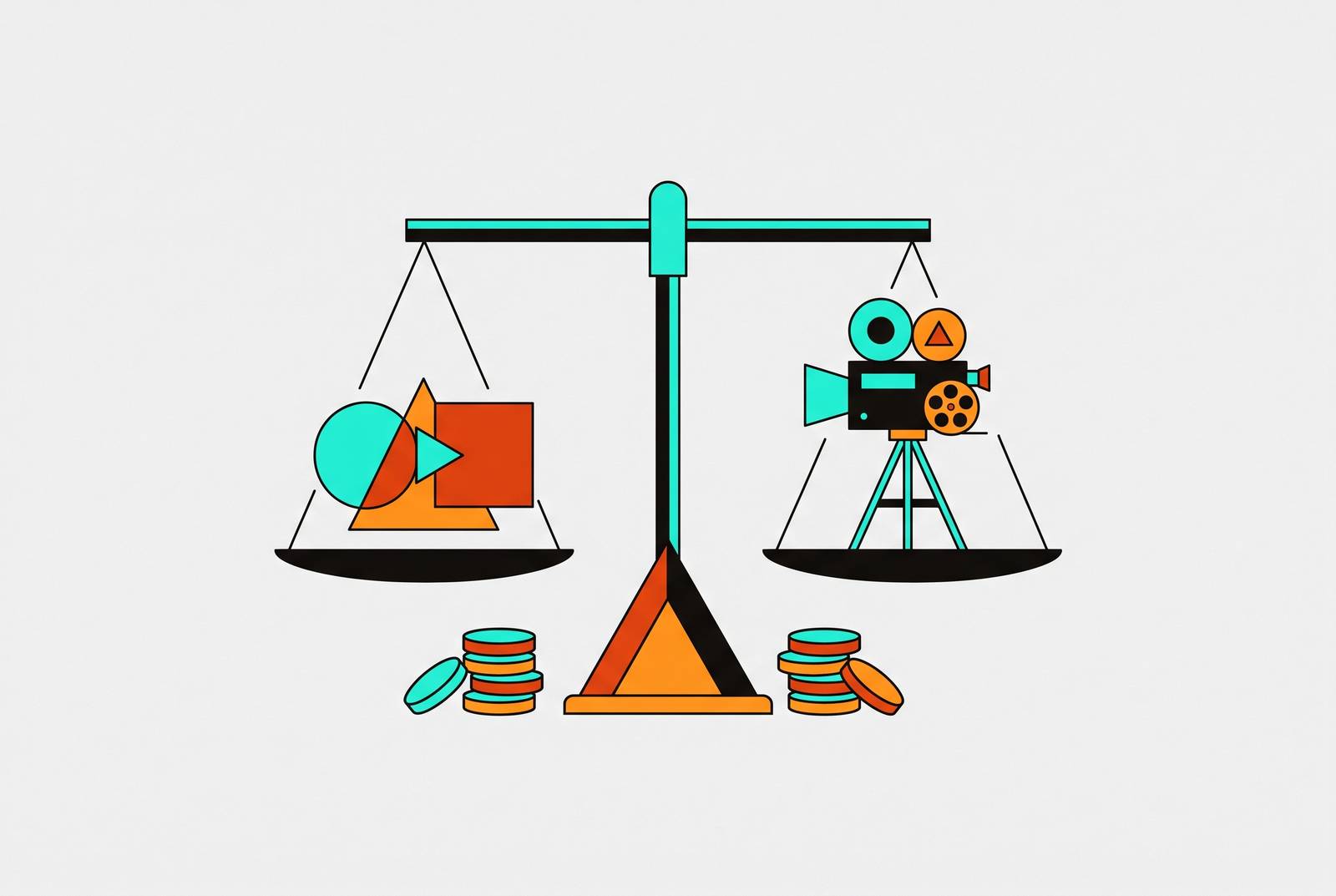
Cost should not come up at the start. The real issue is picking animation versus live action to actually display your product, and SaaS teams usually settle this before any invoice arrives. A cheap video that fails to make the product click loses trials and gets pulled after six weeks, no matter what it cost to make. B2B buyers are unusually video-hungry: 98% of B2B decision-makers have watched explainer videos, and 87% say video swayed the purchase itself. Next comes each real cost split across the two formats, plus which one matches the product.
What SaaS video actually gets purchased, and at what volume
B2B SaaS, at 44% of a single agency's clients, forms its largest video production group, more than any other vertical it handles. Startups hold 47% of all client work, scaleups take 35%, and big teams 18%, so this interest spreads through every growth phase. Video budgets aren't just for well-funded late-stage teams.
Clients request the explainer far more than any other format by a wide spread: 53% of everything finished through 2025, per client data from Motion The Agency. This is key since cartoon and filmed videos cost way more or less for the same work, so choosing badly hurts your budget. The money is the issue. Brands channel 20–30% of their total marketing budget toward video, while SaaS firms run leaner, contributing 15 to 25%. They've already set aside those dollars. Your format pick simply determines if it’s used right or wasted.
What animated video costs in 2026, broken down by style and tier
That range is so wide it barely tells you anything by itself. Across 110 studios surveyed by Yans Media, prices for a single animated video ranged from $950 to $250,000. A 60-second explainer typically runs $8,746; American studios come in at $12,667, while European ones sit near $5,662. For startups, the grounded choice is somewhere between $4,000 and $7,000 to get a 60-second custom explainer. Spend much more without a clear need, lots of people to show or many product points to cover, and you’re wasting cash.
Cost depends more on look than on runtime. You keep seeing the same 4 tiers:
- Whiteboard animation runs $800 to $5,000 per finished minute. Quick to produce, visually plain, fine for internal training or a quick social cut.
- Motion graphics cost $1,500 to $10,000 per minute and fit SaaS dashboards, data charts, and UI walkthroughs better than any other style.
- 2D animation runs from $1,500 up to $20,000+ a minute, with B2B projects usually going for $5,000–$12,000.
- 3D animation runs $5,000 to $50,000+ per minute, reflecting genuinely scarce labor. Median pay for a 3D animator is above $85,000 a year, and that shows up in the quote.
From there, budgets fall into general ranges. AI-assisted or Template work lands between $1,500 and $2,400, okay for a quick ad clip yet rough enough that a person must check it over themselves before launch. Once a business closes its Series A, 2D work between $2,500 and $5,000 is where most begin. Higher-end motion or 3D costs $5,000 to above $15,000, typical for a main launch film.
Folks starting out get caught by one thing: planning, scripting, storyboarding, and drawings cost the same no matter how much time the video runs. A 30-second video isn't half the price of a 60-second one, because the thinking work up front costs the same either way. Nobody's reducing that invoice simply since runtime shrank.
Costs for 2D and 3D move differently, too, and first-time buyers usually get this wrong. Each fresh shot in 2D needs art built from nothing, so costs grow almost linearly as length increases. 3D front-loads its pricey setup, making assets, rigs, and lights once, before reusing everything cheaply throughout each shot. For a brief single-use product video, 2D is often the better choice. A multi-part program that reuses its cast over and over may begin to favor 3D.
What live-action video costs in 2026, and where the budget goes
Real-world video jobs can cost $2,000 with one-person UGC-style work or start above $50,000 on a complete studio job. Software shops usually suggest spending $8,000 up to $50,000 on a 60 to 90 sec demo. Per-minute benchmarks place live-action product demos between $1,000 and $3,000 for each one, while typical business explainers cost between $4,500 and $20,000 per piece.
There's a strict bottom line here. Prices below $5,000 on a SaaS marketing film point to generic output or overseas production issues. Spend less, and corners get cut on the parts you only notice once clips arrive back.
So where do those budgets really end up? Live-action budgets typically break down as follows: scripting and setup for pre-production use 15 to 20%, shooting with crew and gear eats 40 to 55% for production, while cuts, tone, sound, and graphics in post-production claim the last 25 to 35%.
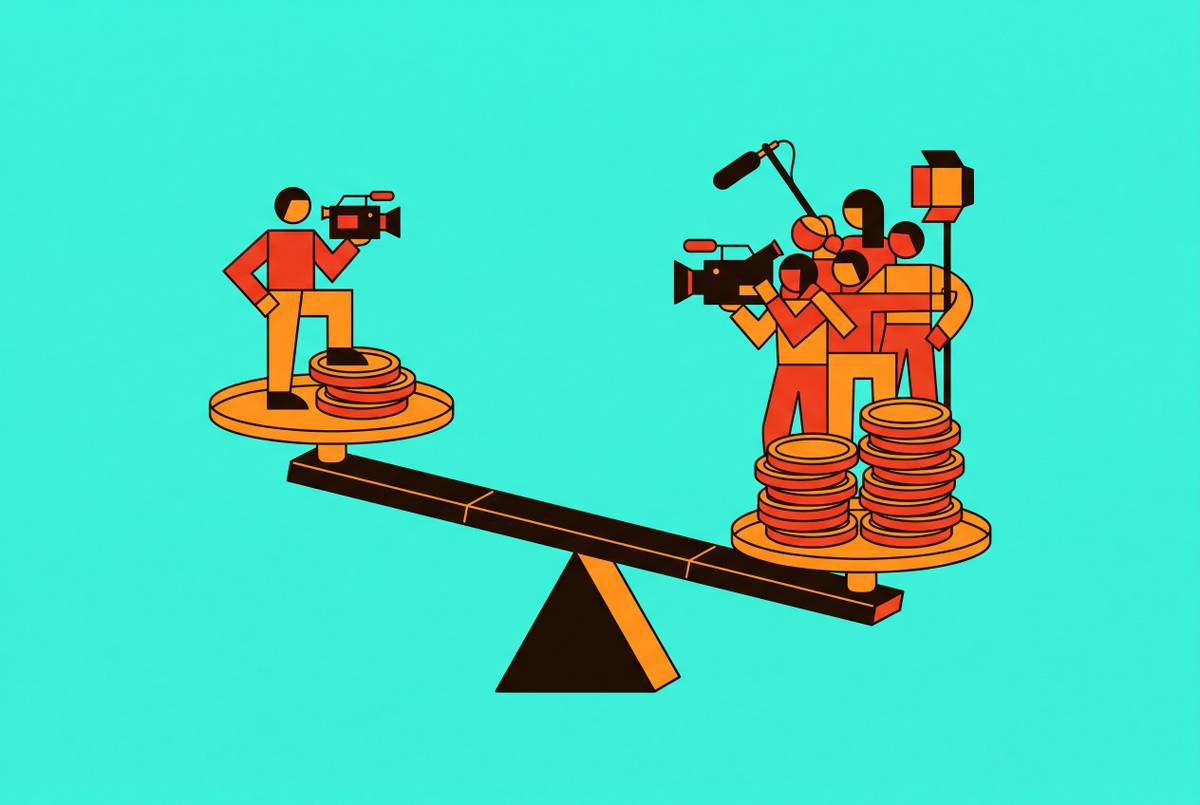
Live action costs are tough to pin down due to the many expenses animation simply doesn't touch. For 2025, SAG-AFTRA actors cost $1,246 minimum per shift, jumping higher for stars or an endorsement. Gear alone might cost anywhere from $1,000 up to $50,000 daily, based on the recording kit, support hardware, and if a stage needs construction. You also pay for permits, delays, wardrobe, and catering, each adding a real charge to the invoice. Real filming keeps running up expenses that a computer-generated frame can't have, so a $5,000 shoot often lands closer to $8,000 by the time it's done.
Where animation and live action diverge on total cost of ownership, not just production cost
Making the video is just part of it, and that’s the part most buyers obsess over. The real divide opens up down the road, once the item evolves and the footage must come along too.
You need a reshoot for Live action to absorb any rebrand, UI redesign, or spoken tweak. Animation is able to update on-screen items, revise its voiceover, and swap graphics without heading back. Across quarterly product demos, new launches, and cost screens, the gap compounds quickly. SaaS teams often find live-action harder to update over time.
Localization follows the same pattern. In every region, Animation swaps out voiceover plus on-screen words at a small fraction of the cost. Filmed video needs new audio or, even harder, new filming for every market, which quickly raises expenses for any business going global.
Animation still carries costs you might not expect. Since edits cost little enough, teams often request additional revision rounds during production. A revision costs below any reshoot, but repeated rounds stack, while repeated revision rounds may increase the initial quote before launch.
Most don't expect how the timelines flip around for buyers. Basic live action is quick: one talking-head video may be done within a few days. 3D animation may take between 10 and 20 weeks. But once you cross about $15,000, animation usually ships sooner regardless, because no crew schedules or outdoor conditions hold it up. A typical SaaS film may take several weeks from start to finish. Shorter timelines may reflect tighter production schedules, and it shows in the final cut.
Any startup that revises its product twice yearly must weigh update costs alongside the production sticker. Your invoice shows only one piece of the video's actual costs long term.
Why animation is the default for most SaaS products, and when it genuinely isn't
The numbers confirm what most people already do: animated videos are often the choice for SaaS and medical brands, while online shops and consulting firms may prefer live-action footage. That divide is on purpose. It simply asks if your product comes in physical form you can show.
Software can't. You can't film Dashboards, moving data, access controls, or API calls and end up with anything worth watching. Animation shows what’s hidden. Filming won't work, and that alone makes the case for defaulting toward animation on any SaaS product.
People share comprehension data, but treat it with real skepticism: a 2024 study found animated explanations of abstract concepts improved comprehension by 42% compared to text-based explanations and by 28% compared to live-action demonstrations. Don't take that figure at face value. Even ignoring those stats, the point stands: animation lets you pick each shade, plus every UI piece and motion you see. No improvised moments during filming, no calls made by an operator's eye in the moment.
Live action still comes out on top in a few cases, and ignoring that fact doesn't help SaaS teams. A credibility video from a founder or CEO needs a real face: viewers can't believe a cartoon the way they believe a person. Real faces often build more trust than animated options when presenting a product. Testimonials follow that pattern: whoever shares an endorsement becomes that product, so their face has to be real. Sales-cycle clips featuring a specific leader talking to a particular buyer outperform any polished explainer, while hiring material needs applicants to watch the real workspace and staff on screen.
Many SaaS teams choose a mix rather than one format: a recorded founder intro, paired alongside an animated walkthrough of the product. Live action earns the confidence. Clarity is what Animation delivers. Each one handles a role the other format can't.
How startup stage should calibrate both format choice and budget ceiling
Spending increases in predictable stages as a startup matures. Pre-revenue founders usually make any early video themselves on a tight budget, if they make one at all. At Series A, with 10 to 50 staff, spending grows substantially since a real video matters now. By Series B, with 50–200 people, video becomes a steady cost instead of a single effort. From Series C on, spending scales up into a real production team with dedicated funding and its own cadence.
Advids says teams making their debut SaaS video in 2025 aimed to keep spending below $7,000. Marketers who've made one video almost always raise the budget around the second time, after watching how it helps the funnel.
The format follows a predictable pattern. When the ceiling is low, Seed-stage teams gravitate toward animation built from templates or even graphics with motion, not since it's inherently less expensive always, but given live action's crew costs rarely drop under $4,500 or $5,000 before the work turns terrible. At Series A, companies can afford a solid 2D animated video for $2,500 up to $5,000 or a quality one-camera filmed production. By then, teams should tie choice to product needs rather than the budget.
One easy tip cuts the noise: when a product needs to display UI, show its data or reveal workflow without physical form, animation earns back the cost at any point. When trust in the person leading the company drives the motion, a filmed clip for that money works better than a smooth product video. The ceiling depends on your phase. It can't choose format by itself, and when cost drives everything, teams get weak video saying little.
What ROI data actually says about which format converts
Video's being on the page is what matters, before anyone weighs format. Sites featuring video hit 4.8%, versus 2.9% on those lacking it. Putting video onto a landing page can raise results up to 86%, Colorlib's 2026 data says, while marketers, at 38.6%, say video is the most impactful part of any landing page, HubSpot found.
Buying ads shows the same clear pattern when you look at Cost. Across LinkedIn, video-driven ads typically cost $35 to $75 per contact. That gap is wide enough to back extra production spending by itself, since non-video ads there cost $80 up to $150 or higher.
Here, length matters beyond mere format purity. For SaaS, 50-second overview videos get far better no-cost test joins than smaller versions, showing duration and a full pitch matter as much as the video type.
That format-fit point closes here: animation's comprehension boost for hard ideas feeds right into understanding the product, which is the bottleneck across typical SaaS funnels. If a buyer can't see what your product delivers, no amount of targeting, however exact, will get them to try it. Its ROI gets earned by Live action somewhere else, when a lack of trust rather than comprehension holds things back. Testimonials, founder accounts, big-deal backing: real faces cut past skepticism like no cartoon figure ever could, whatever the cost.
Choose the low-cost format where the product doesn't fit, and that one underperforms a pricier format matched well, without fail. Cost helps, but choosing what works is what actually matters. Figure out what the product needs so people get it, then pay for the highest production level your budget allows. A format that actually gets the point across earns back more than one that only cost less up front.