Video Agencies Specializing in B2B Explainer Videos in the USA
Script quality and production model fit matter more than awards when selecting a B2B video agency.
Choosing a B2B explainer video agency is a test of messaging skill and animation quality. The strongest choice is the agency whose production model, scripting process, and business evidence fit the job. This guide explains how to make that choice without mistaking a polished portfolio for proof that a studio can help generate pipeline.
Why most B2B video agency searches produce the wrong result
Hundreds of agencies use the same “B2B explainer video” label, leaving buyers with plenty of options and little clear signal. A search puts animation studios, live-action production companies, and monthly creative partners next to one another as if they sell the same thing. They do not solve the same problem. Reputation and awards cannot resolve that mismatch, yet roundup lists often make those the basis of comparison.
Start by identifying the problem the video must solve. A company with one flagship product story needs a different production relationship from a company running paid media at volume. Choosing the wrong model wastes budget even when the agency does good work within it. Model fit comes before the agency shortlist.
Which of the three production models matches your situation
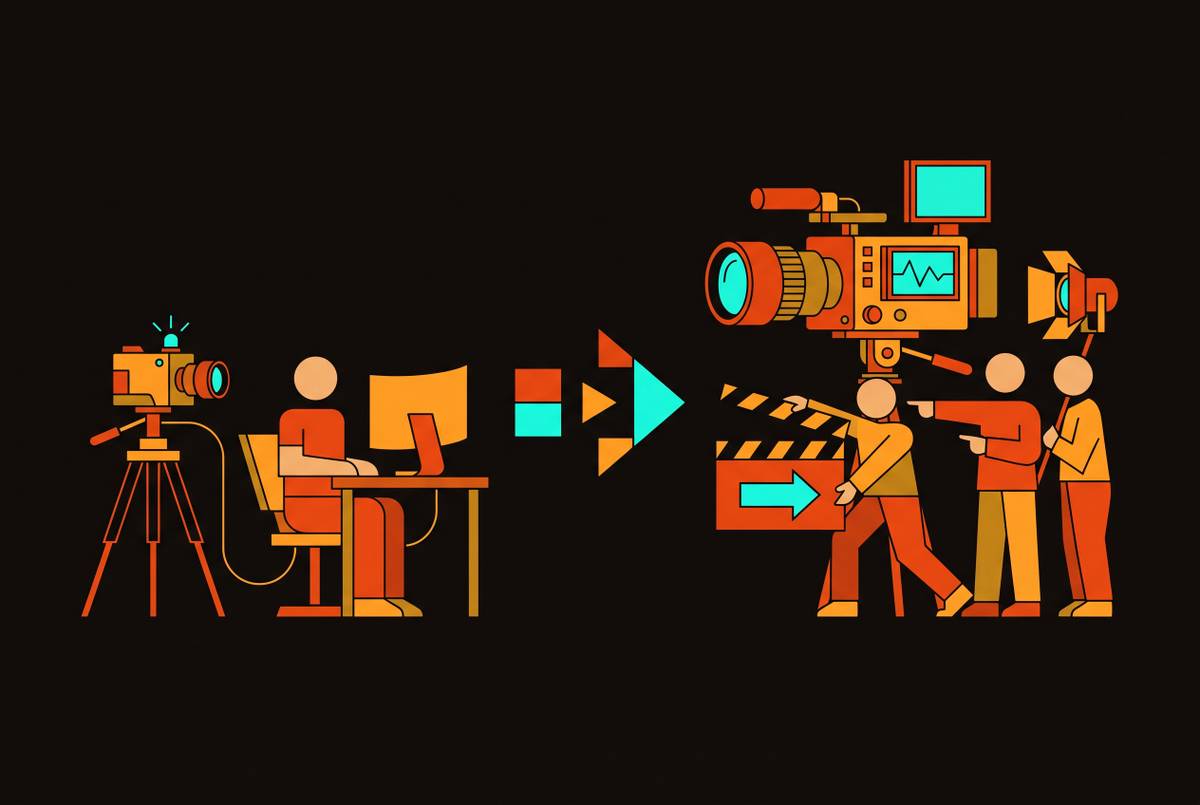
Explainer and animation studios suit products that are genuinely hard to describe or visualize. They usually work per video, with lower investment and shorter timelines than live-action production. Their weakness is beautiful animation explaining features that nobody was confused about, which makes the script the deciding factor in whether the budget worked.
Live-action production companies are a good fit for brand films, customer documentaries, and executive stories. Their per-project work brings higher investment and longer timelines, but real customer voices can provide the proof a buyer needs. The film can look good while having little to say. A cinematic film about company values will not move a technical evaluator who needs to understand the product.
Subscription and Creative-as-a-Service partners fit continuous paid media and multi-format distribution. A single ad creative can burn out in weeks, so ongoing output becomes a structural need. Volume alone is not a strategy, though. Without direction, a monthly retainer produces a full content calendar while missing the funnel.
The criteria that actually separate B2B-capable explainer studios from the rest
For buyers in the animation studio category, the first filter is script ownership. Ask whether the agency develops the script or only produces a video from client-supplied material. In a script-first workflow, animation waits until the script and storyboard are approved, so there are fewer rounds of changes and the work stays on brief. Starting animation before that approval can turn messaging changes into weeks of rework.
Second, establish whether the agency has B2B-specific scripting skill. For each relevant portfolio project, ask who wrote the script and whether the client supplied a finished brief. Client logos do not answer that question. B2B writing has to pass legal or compliance review and keep a bored technical evaluator watching. Strong consumer work alone does not establish that skill because the script, pacing, and visual language differ.
Third, look for depth in relevant verticals rather than a broad claim to serve technology companies. Work across SaaS, fintech, healthtech, AI, and enterprise tech can signal familiarity with difficult product stories. Relevant experience helps a studio reach a strong first draft faster and with fewer scripting rounds. Actual client work is the useful evidence here. Self-reported awards and credentials say less about how quickly a team will understand the brief.
Fourth, separate business outcomes from production quality. Wyzowl’s survey found that 88% of video marketers report that video helps them generate leads, but that category-level result does not prove an individual studio’s performance. Ask for results tied to a named video, including qualified leads, pipeline created, conversion changes, or social performance. A polished reel is not outcome evidence. A simpler video with a clear ROI story can be the stronger signal.
Fifth, assess process transparency before the proposal stage. A defined, repeatable workflow gives buyers a basis for judging timelines and how legal, product, and marketing approvals will work. Ask to see the production brief before signing. Sixth, look for honest limits on fit, because an agency that can explain which briefs it should decline is more credible than one claiming equal strength everywhere. “Specializes in your industry” means little without the preceding evidence.
What the format and length of an explainer video should be — and why buyers often get this wrong
Even a strong studio can underperform against a weak brief. Format and length need to follow the viewer’s task. B2B buyers are busy and get bored easily. Short explainers tend to outperform longer explanations in paid channels and on landing pages, where completion rates drop sharply as length increases. A comprehensive product story is not automatically a watchable one.
At the top of the funnel, a short animated explainer can introduce the problem the product category addresses and the product’s positioning. Mid-funnel viewers need a product demo or walkthrough that goes into more detail on features, so a longer video can make sense. At the bottom, a customer case study or testimonial benefits most from live-action production quality.
A homepage hero makes the trade-off concrete. Commissioning a three-minute brand film for a position where a 60-second explainer would convert better spends production budget on the wrong task. The agency’s discovery process should expose that mismatch before scripting begins. A studio that maps the video to a funnel stage is contributing strategic judgment.
How pricing actually works and what the tiers tell you about an agency's model
Price identifies the production model and complexity tier more reliably than it predicts performance. Entry and mid-market animation studios often list pricing tiers for simple product messages and for buyers who need many videos. The specialist studio mid-tier is where most B2B SaaS buyers commissioning a single flagship explainer will land. Full-service and enterprise work adds strategy to the scripting, a process for working with multiple stakeholders, and experience with enterprise clients. None of these tiers removes the need for portfolio evidence.
The economics change when output becomes continuous. When buyers need more videos each year, subscriptions can cost much less per video than the same work paid for by project, especially when they need many format variants. India-based production from studios including What a Story and MyPromoVideos offers another cost advantage relative to comparable US or UK studios. Working this way calls for care in managing asynchronous communication, and a brief with a clear structure helps.
The lowest quote is not necessarily the best value. Overpaying for polish on a simple use case and underpaying for scripting on a difficult one are opposite versions of the same mistake. For buyers, the useful test is whether the price supports the project’s complexity and strategic needs. Cost per qualified lead or pipeline contribution tells buyers more about how well a video works than cost per video does.
Established US-based explainer video agencies and what each is genuinely best for
These agencies provide starting points for different briefs. Location also needs a careful distinction here. A US office does not necessarily mean US production, and the options below include an India-based alternative for US buyers. The relevant comparison is the fit between the work required, the production arrangement, and the agency’s stated strengths.
Demo Duck is based in Chicago, IL, and was founded in 2011. It works across animation and live-action, with strategy, scripting, storyboarding, full production, and revisions included in every project. Its fit leans toward enterprise companies, healthcare organizations, education platforms, and brands with an established visual identity. It favors deep, multi-project relationships over one-off engagements. The studio recommends budgeting at least $16,000, with typical 2D animation projects above that threshold.
Digital Brew is an Orlando, FL, agency that describes itself as “a marketing agency first, video company second.” Its stated focus is conversions and measurable ROI. That makes it relevant for B2B buyers who want a conversion-oriented production relationship rather than an engagement centered only on visual execution. The positioning is a starting signal that calls for requesting a named project result.
Broadcast2World is based in Piscataway, NJ, with production handled at its studio in Gurugram, India. That distinction rules out treating it as domestic US production. Its in-house service covers scripting, storyboarding, voiceover, animation, and sound design without outsourcing, and its thousands of explainers include work for Siemens, AWS, and Aiven. It fits straightforward B2B explainer needs at a lower price point, provided the buyer is comfortable with that production geography.
Wienot Films is based in Austin, TX, with additional offices in New York and Australia. It uses high-end character animation, motion graphics, and whiteboard explainers to tell visual stories that make complex ideas clear. Style is the clearest reason to consider it. Companies that want character-driven or whiteboard work can check its portfolio for that style and work with a US-based team that offers a choice of locations.
What a Story was founded in 2015 and uses India-based production to serve global clients. It focuses on explainers and product videos for complex B2B, SaaS, and AI/Tech companies, with strategy built around buyer psychology. Clients include HighRadius, JustCall, Qapita, and Elisity. Typical timelines are 3–5 weeks. Its accessible starting price and cost structure suit buyers seeking strategic scripting below comparable US studio tiers, including SaaS, fintech, healthtech, enterprise tech, and AI companies.
ContentBeta is a Creative-as-a-Service studio for SaaS, B2B software, and cybersecurity brands. Its output spans explainers, product demos, UI animations, ad creatives, and sales assets without requiring clients to build large in-house teams. The best fit is ongoing demand. It belongs on a shortlist when one vendor needs to support several formats continuously, rather than in a comparison based only on a one-video quote.
How AI is changing what agencies do — and what it does not change
AI is compressing production timelines and lowering costs at the commodity end of video production. AI-assisted workflows can move production from weeks to days, particularly for buyers needing volume. Training content, documentation, product walkthroughs, social edits, and format variants are well suited to tools that prioritize consistent output over strategic differentiation.
That shift does not remove the hardest B2B work. When a video has to persuade and the stakes are high, it still needs a script that can stand up to both a skeptical technical evaluator and legal review. Live-action work that defines a brand also needs physical locations and professional crews. Faster visual production changes which parts of the agency’s service are becoming commodities.
The hybrid model uses AI-assisted visual production while people come up with the concepts, write professional scripts, and oversee the creative work. It can shorten timelines without stripping out the strategic layer. For buyers, an agency’s ability to use AI is a good sign when it makes the work faster and cheaper and leaves messaging decisions in capable hands. Agencies moving toward strategy and scripting are better positioned than those competing on speed and price alone, which makes script ownership and documented outcomes more useful selection criteria.
A practical shortlisting and briefing process for B2B buyers
To put the framework into practice, decide on the production model before collecting agency names. Keep animation studios, live-action houses, and subscription partners out of the same evaluation round unless the production need has first been resolved. Then check who wrote the scripts for relevant B2B projects before judging how the videos look. Establish what the portfolio actually proves first. An agency that animated a supplied script has demonstrated execution.
Next, ask for the production brief template and check how the process works when multiple stakeholders are involved. Follow that with a request for a specific business result tied to a named B2B project. Compare pricing only after those conversations establish the strategic depth on offer. The budget should match the job’s difficulty. Neither extra polish nor a low production fee compensates for missing scripting skill.
Before requesting proposals, build the brief yourself. Define the funnel stage, the audience, the call to action, the distribution channel, and the success metric. Specify whether the viewer is a technical evaluator, an economic buyer, or an end user, because those audiences need different explanations. This is the step entirely within the buyer’s control. A precise brief gives agencies a concrete problem to answer and makes a specific proposal easier to distinguish from a generic capabilities deck.