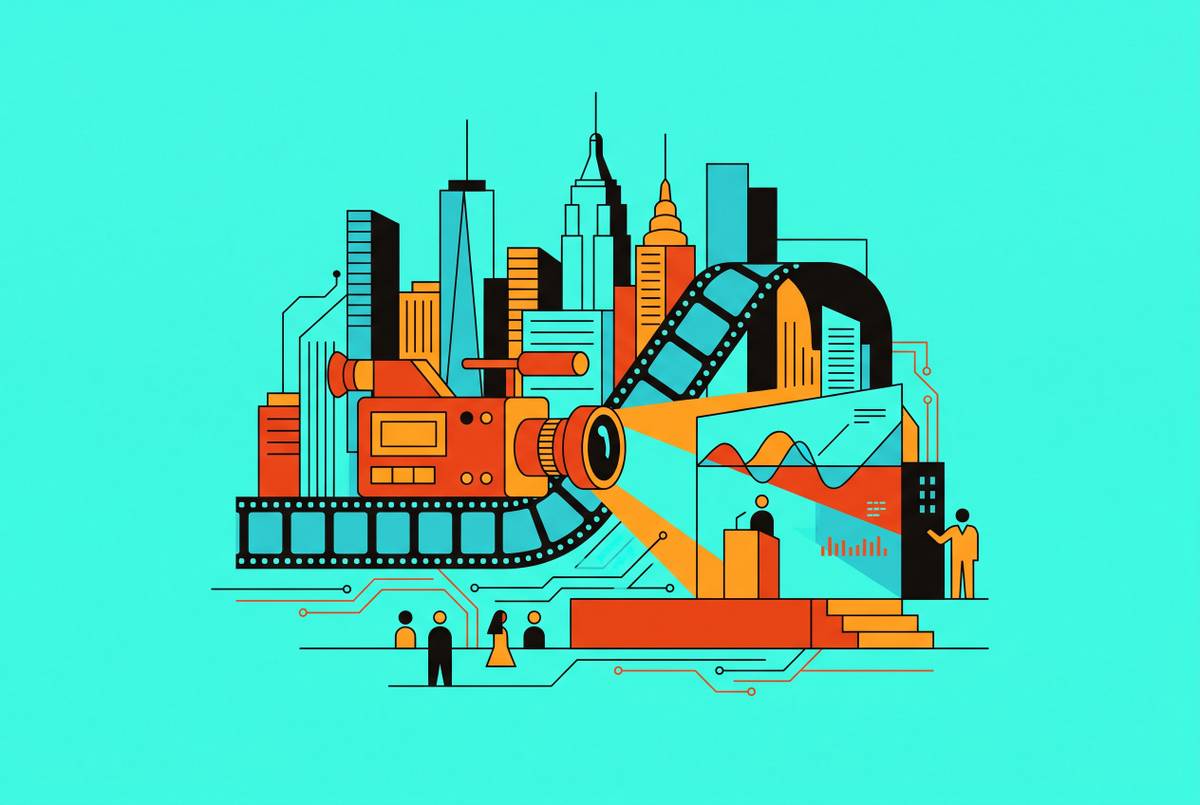
Post-Production Services Available to Startups in New York
New York post-production shops transform raw footage into multi-format assets at competitive rates.

In post-production, raw footage is transformed into a polished asset ready for use, such as being sent by a sales team, displayed on an ad platform, or featured on a homepage. This phase involves a range of tasks, including offline editing, color grading, sound design and mixing, motion graphics, visual effects, and formatting for final delivery. For a startup, this stage determines if the investment in a shooting day was justified.
Founders often allocate their entire budget to the filming process, viewing post-production as an afterthought. A poor edit can ruin excellent video, making it unwatchable, while a skillful edit can salvage a shoot marred by bad lighting and multiple founder mistakes. For a SaaS or B2B company, this editing stage transforms a raw product demo into a polished, shareable asset, one that a sales rep will confidently send to a prospect. The editing process determines what a viewer learns about the product and, just as crucially, how it makes them feel.
Often, another key point is overlooked from the start: footage usually can't be used for just one thing. A video for the homepage, a social media ad, a slide in a sales presentation, and a loop playing at a trade show all require unique pacing, various aspect ratios, and sometimes completely different narration. That's where Post comes in: it transforms a single shoot into not just one, but five different assets.
Why New York is a serious option, not just a prestige choice
New York sits alongside Hollywood as one of the two main U.S. anchors for post-production work, according to recent industry analysis. According to ProductionHub's 2025 directory, there are over 131 post-production facilities in New York State. That's real depth, with plenty of names beyond the famous few with long waitlists.
This industry has grown formal enough to establish its own professional association. This alliance, called the Post New York Alliance, unites facilities, unions, and independent editors and colorists, showing the industry's level of maturity in having a shared set of standards.
What advantages does that density provide for a startup? Mid-tier rates remain competitive because the high volume of work prevents prices from creeping up to monopoly levels, something that’s more likely in markets with fewer clients and less activity. New York's depth of specialization is impressive: Some agencies focus solely on tech explainer videos, while Letterspade, a boutique video studio for technical startups, handles demand-generation assets alongside others that have carved out a niche in finance content or established themselves as go-to experts for luxury brands. You can also find skilled professionals who switch jobs among advertising agencies, streaming services, and freelance projects within a single month. When a startup hires an editor in New York, that editor frequently just finished editing a project for a far larger client, sometimes as recently as the previous week.
NYC post houses are built around client-facing collaboration too: review suites, structured rounds of feedback, in-room sessions where a founder can say "cut that shot" and watch it happen on the spot. Founders who want to guide the creative process hands-on, rather than just signing off on edits via email, will find this approach invaluable.
But one thing that isn't discussed enough is that all this doesn't make the cost issue go away. The expenses of running a business in NYC are significant, and many projects don’t require a founder to be present in a Midtown office. Keep that in mind for now, we’ll revisit pricing and remote options later.
The service categories a startup is most likely to need
Offline editing and assembly. This involves the foundational tasks: selecting the top shots, crafting the story's rhythm, and determining which parts to keep and which to discard. This service sits at the heart of product demos, founder interviews, brand films, and ad cuts. Some Manhattan studios offer offline editing and create development materials such as sizzle reels, pilots, and proof-of-concept tapes. These are helpful for startups needing a more polished product than a rough cut but who aren't yet prepared for a complete advertising campaign.
Adjusting the visuals in color grading transforms a technically precise shot into something that feels intentional and aligned with a brand’s identity. The fact that Some boutique remote colorists in New York work with a diverse range of clients suggests that color grading is a discipline with broad applications. Prices vary significantly based on how long the session is and which level of colorist you hire; color grading costs vary by project scope and duration. A 90-second demo video requires far less work than a feature-length project, so treating them the same when it comes to pricing is a sure way to overspend.
Startups frequently overlook sound design, mixing, and ADR, which are often the most skipped line items, and these are the areas where a company can lose credibility the quickest. Poor sound instantly makes your work look unprofessional, even if the video quality is top-notch; viewers won’t cut you slack on a cluttered, unclear mix just because the images are stunning. Some studios offer voiceover recording, dialogue editing, and mixing that meet broadcast standards. Some New York studios focus entirely on audio services. Rates for mixing stage time can vary greatly depending on the facility and where it's located, so it's best to get a separate quote for this service instead of assuming it's included in the overall price.
Motion graphics and animation. This area is particularly beneficial for SaaS companies, as UI walkthroughs, feature callouts, and data visualizations cannot be filmed on location; they must be created from the ground up. Lower-thirds and text treatments are cheaper and quicker to produce than full animations, so clarify which type of work a quote includes before committing. Some New York studios specialize in visual effects, animation, and motion graphics.
VFX. Simple fixes, like erasing a boom mic shadow or cleaning up an unwanted reflection, cost far less than building full composited shots with multiple layered elements. Some studios offer green screen filming and editing facilities in one location, which is handy when filming and compositing must occur in close succession.
In New York, Some New York studios offer a comprehensive range of post-production services under one roof, serving both commercial and branded content clients. Some studios provide services for audio, music, and video in various formats. The main benefit of these full-service post houses is their streamlined structure: having a single point of contact ensures a consistent creative vision across all disciplines, reducing mistakes during the handover between editor, colorist, and sound mixer.
Editing raw footage you already have. Some startups already own video, whether filmed in-house or by a freelancer, and simply need it edited into a polished, ready-to-use version. Some studios offer standalone post-production services for existing footage.
What things actually cost and how to read a quote
Put it simply right up front, it affects your whole buying process: New York City’s prices are some of the highest nationwide, and a quote from a top-tier agency might be multiple times higher than what a startup founder originally anticipated.
There's a floor, though. For a New York-based company, Some providers offer editing, color, sound, and motion graphics services at entry-level rates, showing that entry-level project work is within reach. According to Full projects in Manhattan that cover both production and post-production can cost several thousand dollars or more, depending on the project's scope, crew size, and the number of deliverables created from the same footage.
Remote work shifts the calculations, and this is where many founders make a mistake: they view all editors as the same. Freelancers' rates vary widely: a generalist editor charges far less per hour than specialists in broadcast graphics, luxury color grading, or VFX. Video editing services that operate remotely can provide quality on par with in-person NYC shops, but often at lower prices. However, this cost advantage is only realized if the task is assigned to the appropriate level of expertise. Treating a color specialist and a generalist cutter as the same line item is a mistake that shows up in the final invoice.
To truly understand a quote, you need to ask what’s covered. Hidden fees like revisions, platform-specific delivery formats, music licensing, or subtitles can sneak into the final bill, so a low initial quote might jump in cost once you factor in all the extras. The time it takes to complete a project also affects the price. Many New York–based providers offer standard delivery windows, and charging extra for faster turnaround is common practice, so make sure you know the timeline and any associated fees before you commit, not once the contract is signed.
Before asking for quotes, divide the tasks into two categories: those requiring a skilled professional (like color grading, sound mixing, or intricate motion graphics) and those that AI tools can manage adequately without human intervention. Separate your budget for the two categories. If you price both piles the same way, founders end up spending too much on simple tasks and not enough on the complex ones.
Providers worth knowing across the NYC market's different tiers
Here's a guide to help you find the right provider, based on your budget, project size, and the amount of creative freedom you're willing to give up.
These all-in-one creative studios are ideal for startups looking to consolidate their post-production needs under a single provider. Some studios handle everything from color grading and visual effects to sound and final delivery. Clutch includes a range of New York post-production companies in its listings.
Many firms intentionally focus on early-stage companies, and this is where most entrepreneurs should begin their search, rather than at places that boast famous clients and have a six-week waiting period. Some studios work with major clients as well as smaller businesses., but it also serves smaller businesses, including early-stage startups, and provides post-production services for existing footage stored on a founder's computer. Some firms focus on helping nonprofits and local businesses with professional video marketing. without breaking the bank, whether that means a full crew for a commercial shoot or just one person handling everything on-site. Some small firms are well-suited for businesses with limited budgets.
When you need something very specific, a focused studio will always outperform a jack-of-all-trades shop. Some providers offer specialized color grading services. Some studios focus solely on audio work. Some studios specialize in visual effects, animation, and motion graphics. Resurgence Imaging specializes in smaller-scale post-production tasks, including media workflows, editorial dailies, and final color correction, making it ideal for projects that prioritize workflow management over creative guidance. Digital Laundry offers a green screen studio along with built-in compositing and editing spaces, making it ideal for productions that prefer to film and finish their work in the same place.
For startups whose video production moves beyond single projects to a regular workflow, Picture Shop provides professional-level post-production services in New York.
These platforms, Clutch, ProductionHub, and Sortlist, compile New York’s local vendors alongside honest client feedback, making it easier to spot hidden gems instead of just relying on the top search results.
Tax credits and city programs that can offset post costs
New York offers a Post-Production Credit as part of its larger film tax credit initiative. The state has set aside up to $700 million in credits per year for film production statewide, with $45 million specifically earmarked for post-production, as reported by NYS Empire State Development as of April 2025. The state offers a baseline tax credit of 30% for qualified production costs, which increases to 35% for post-production costs incurred in upstate New York. There is no limit on how much credit each project can get, and any leftover credit can be carried forward until 2034.
Most startups overlook this key point, and it’s the one that matters most: as the Buffalo Niagara Film Commission confirms, you can still claim the post-production tax credit even if your project was filmed outside New York State. What matters for the credit is hiring a New York company for the post-production work, not where the filming took place. Even if a startup filmed its project in Austin or Los Angeles, it can still qualify for the post-production credit by having a New York-based editor work on the footage.
Additionally, there is a distinct NYS Independent Film Production Tax Credit that provides a 30% rebate on eligible production expenses for independently owned companies, covering specific above- and below-the-line salaries. Starting in 2026, the tax credit will receive $100 million annually, according to NYS ESD, making it a valuable opportunity for startups with a formal production structure, regardless of whether they're self-funded or backed by investors.
The city also runs a workforce program that's worth checking out. The NYC Department of Small Business Services and the Mayor’s Office of Media and Entertainment oversee the Made in NY Post-Production Training program, while Brooklyn Workforce Innovations handles its daily operations. This program teaches people from low-income backgrounds how to get started in post-production jobs, using software such as Premiere Pro and Photoshop. For a startup building out in-house post capability, the employer-side benefit is real: businesses that set up a training plan for program graduates can get wage reimbursement covering a substantial portion of that employee's first 280 hours.
None of this happens automatically. To qualify, productions must meet specific requirements around entity structure, production classification, and minimum spending thresholds, which is why it's essential to verify eligibility before budgeting for a credit that may not be available.
Remote and hybrid post as a practical cost strategy
For many projects, remote post-production is now the norm, yet some founders still view it as inferior to NYC post, a bias rooted more in habit than in any real difference in quality. Because editors now connect to shared servers, where they do their work, the place they’re physically located matters much less for the quality of the final product than it did in the past.
The cost reductions are genuine, but they vary significantly. According to Increditors’ 2026 guide, remote-first studios deliver work that matches the quality and turnaround of New York City in-person rates, but at a noticeably lower price, especially for editing and color grading. Sound work sees a smaller difference because achieving excellent mixing requires a well-designed acoustic space, which is more difficult to replicate when working remotely.
Even with remote work’s flexibility, a classic New York post house still delivers advantages that distributed teams simply can’t replicate. Having all editing, color, and sound services in one place reduces mistakes that can occur when work is passed between different teams and keeps everyone on the same creative page. Client review suites allow stakeholders to provide immediate feedback in person, and the ability to assess whether an edit aligns with the brand's voice is something that a cloud-based workflow tool cannot replicate, according to MCM Creative Studios as of October 2025.
Many mid-tier New York City boutiques have adopted a hybrid approach, combining remote editorial work with in-person sessions focused solely on color and sound. By adopting this hybrid approach, these NYC firms can achieve top-notch results in key areas, all while managing their overall expenses efficiently.
It all depends on how much hinges on the final output. For projects like a homepage hero video, an investor pitch reel, or a launch campaign asset, the quality of color grading and crisp audio alone makes on-site post-production worth the investment. When it comes to producing a lot of short-form content like social media ads and product updates, remote-first or AI-assisted workflows are the most practical choice. For startups that already have footage and simply need expert editing, directly comparing remote editing services with standalone post-production services in New York City, based on the specifics of the project and the terms of revisions, is the quickest route to finding a suitable partner.
How AI tools are changing what startups can handle in-house, and where they still fall short
A significant change has occurred in this area over the past year or so. Tools like Google Veo and Runway Gen-4.5 now produce text-to-video results good enough for real projects, not just demos, and the AI features in Premiere Pro and DaVinci Resolve are saving serious time in editing, as Pixflow reported in July 2026.
AI now reliably manages tasks such as automated color grading, audio cleanup, adapting captions across platforms, synchronizing music, and creating rough cuts directly from transcripts using tools like ⟦Descript⟧ or ⟦OpusClip⟧. According to mean.ceo’s June 2026 report, a single marketer can now produce visuals, voiceover, captions, and a rough cut by themselves, a job that previously required three or four separate specialists.
However, AI has its limits, and most of the excitement around it ignores this fact. AI can’t tell the difference between a clip that truly highlights what makes the product stand out and one that’s just polished, figuring that out requires knowing the sales angle, not just watching the footage. While AI can handle some tasks, creating sound designs that evoke real emotions and achieving precise color grading for diverse skin tones and intricate lighting setups - tasks that require a deep understanding of aesthetics and brand identity - still require human expertise.
According to an evaluation by Storimatic Studio from April 2026, AI tools reduce the time needed to go from raw footage to a rough cut, but the editor ultimately determines the story's direction. No tool can do that yet, and it won’t be automated anytime soon.