Video Prospecting Tools Compared for B2B Sales Teams
Choose between authentic one-to-one recordings or AI-scaled personalization based on deal size.
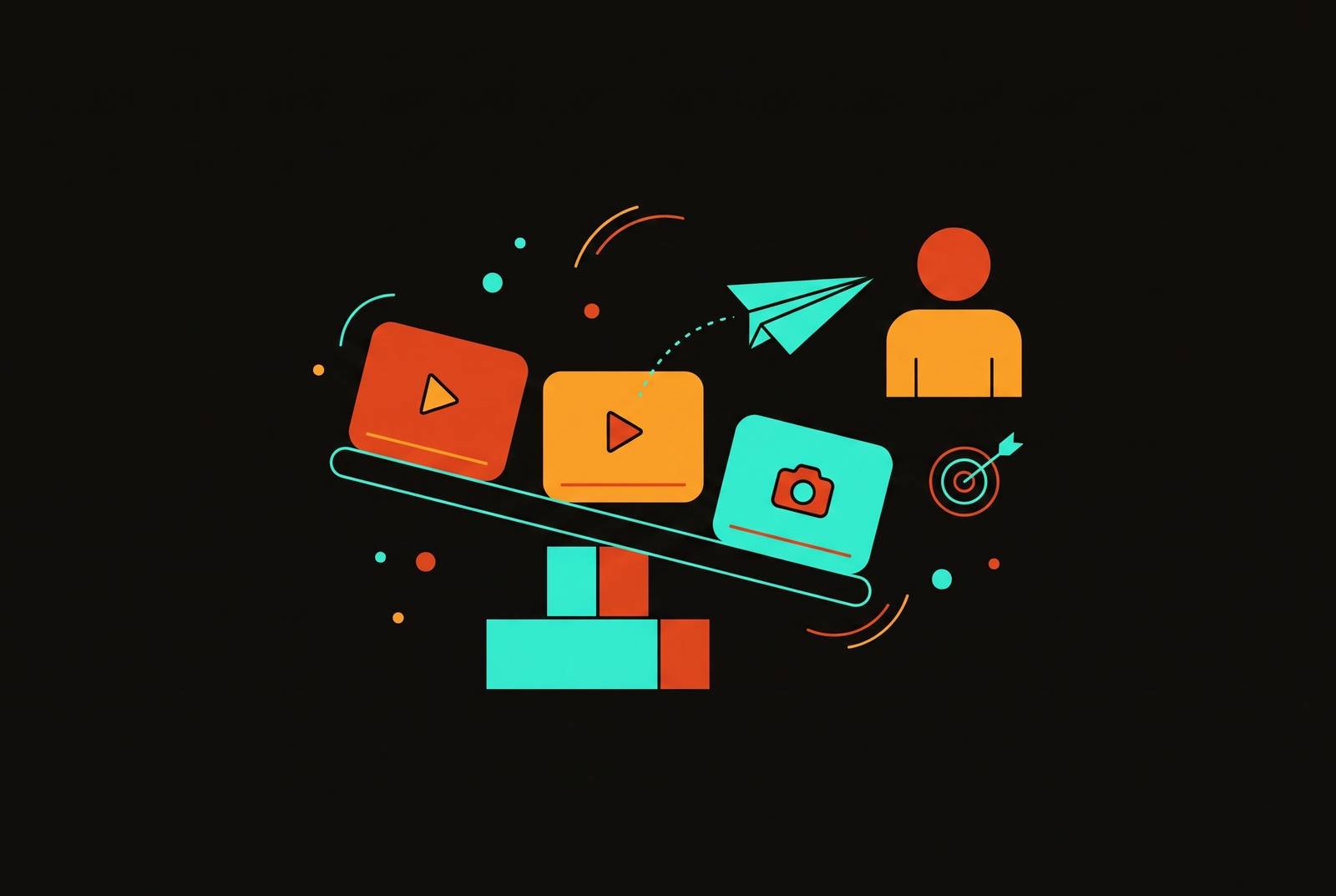
Video prospecting tools divide into two different approaches, genuine one-to-one recordings and AI-scaled personalization. This comparison explains where each fits. For B2B sales teams, the right choice depends on deal size, outreach volume, and funnel stage. A tool that helps a rep build trust in a high-value deal may be the wrong tool for sending hundreds of cold introductions.
Why video prospecting has split into two fundamentally different tools categories
Manual recording tools produce a new video for each prospect, with the rep’s real face, voice, and delivery. Nothing is synthesized in that recording. AI personalization tools instead let a rep record once and generate individualized versions through voice cloning, background changes, or a digital replica. One shows that the rep took time for the prospect, while the other cuts the work it takes to personalize outreach.
That difference comes before screen recording, CRM integration, or interactive features. A platform can have several of these features, but there is still a trade-off between a fresh human recording and generated personalization. The distinction is how each recipient’s video gets made. A team buying for authenticity is paying mainly in rep time, while a team buying for scale accepts that some of the apparent one-to-one delivery is synthesized.
Why the authenticity-vs-scale trade-off is not just a preference but a performance variable
A personal video can signal that someone took the time to reach out. That signal weakens if the prospect reads the delivery as AI-generated, even when the message includes their name and company. Relevance still counts, but it is not identical to trust. Trust matters more alongside relevance as deal size rises and buyers need confidence in the people behind the offer.
Gartner’s March 2026 survey found that most B2B buyers would rather have a rep-free experience. Its May 2026 survey found that a comparable majority prefer to validate AI-generated insights with sales reps. Buyers can want independent research and still turn to a person when they need assurance. Prospecting video therefore has a stronger role when it opens a human conversation.
AI-first vendors make a reasonable counterargument that relevant personalization can land regardless of who, or what, delivers it. A company name or referenced trigger event can make an introduction worth watching even through an avatar. The answer depends on the job. Early outreach may benefit most from relevance at volume, while an active deal may justify the extra effort of a genuine recording.
The three variables that determine which approach fits a given team
Deal size is the first filter because it sets the economics of extra effort. When annual contract value, or ACV, is higher, even a small gain in demo-to-proposal conversion can make it worth spending a lot of time on each video. At lower ACV, manual recording can cost more than the additional conversion is worth. The same effort has a different payoff. Personal attention needs to earn back its cost at the stage where the video appears.
Outreach volume is the next filter because rep time is finite. A rep sending 10–20 researched videos per week is in manual-recording territory, while a team sending hundreds needs AI personalization to sustain the workflow. A tool can be easy to use and still demand too much repeated work.
In cold outreach, a personalized thumbnail or referenced company can interrupt the inbox pattern and earn a click. After a demo, human presence can help close the trust gap across multiple stakeholders. The decision stage raises the stakes again. A short recording from the rep or a senior leader can give a proposal personal weight that an avatar cannot replicate.
Manual recording tools: Loom and BombBomb, and when authentic beats scalable
Loom is a good fit for solo reps and small teams that make a small number of videos for high-value accounts. Its browser extension records the screen, webcam, or both, then generates a shareable link without requiring the prospect to create an account. The mechanics are simple enough for direct follow-up. Its free plan supports initial testing, but the limited video allowance is a lifetime cap rather than a resetting monthly allowance, and recordings have a time limit.
The limitations appear when a team needs coordinated outbound. Loom lacks contact-level, per-recipient engagement analytics and native CRM sequencer integrations. That makes it a stronger fit for asynchronous deal-stage video than for an organized cold-outbound operation. It serves a job where the rep’s specific explanation is more valuable than automated distribution.
BombBomb brings that personal approach into the inbox through its deep integration with Gmail and Outlook. It fits relationship-heavy selling where the rep’s identity is part of the reason a buyer responds, and AI synthesis could weaken that personal connection. It offers a trial, with no free tier. With both tools, though, the rep still has to record every video. Their practical limit is the team’s time budget, which is acceptable when the account value and relationship justify it.
AI personalization tools: HeyGen, Sendspark, Hippo Video, and the scale-first approach
HeyGen takes the full-avatar route, using a two-minute recording to clone a rep’s face and voice. A script with variable fields then produces individualized account videos across languages without new recordings. That makes multilingual account outreach a distinct fit. It suits reps who can forgo their own raw, on-camera performance in every clip, and its LiveAvatar feature also supports real-time conversation, which is a separate use case from sending an asynchronous prospecting video.
Sendspark keeps the rep’s actual recording as the base. AI voice cloning adds each prospect’s name in the rep’s voice, and the prospect’s website or LinkedIn profile is shown in the background. The rep remains visibly present in the original footage, but each recipient’s version does not require another take. This helps when there are too many videos to record each one from scratch but it still matters who the rep is.
Hippo Video’s Humanize AI personalizes voice and background from recipient names and websites. It also puts first names and company names on thumbnails, so personalization can work before playback begins. Its interactive features serve a different purpose. In-video calls to action and lead capture forms make it useful when the next step is a booked meeting.
Across these tools, integration depth depends on the plan. Teams should check the price of the tier that works with their sequencer workflow, since the entry price may leave that out.
Vidyard: the analytics-first all-in-one and where its per-seat pricing model changes the calculus
Vidyard stands out for its per-recipient analytics, which show who watched, how long they watched, and where they stopped. Its native integrations include HubSpot, Salesforce, Outreach, SalesLoft, and Apollo. Connecting viewing behavior to the systems a revenue team uses to prioritize follow-up suits teams that have already established a useful role for video.
Access to that workflow depends on the tier. The free plan has limited monthly videos, Starter is billed annually per seat, and Teams adds CRM data sync at custom pricing. API access is Enterprise only. Vidyard’s AI Avatar feature runs through a HeyGen integration, packaging avatar creation into workflows reps can use within SalesLoft, Apollo, and Outreach.
A 10-person SDR team on Starter faces a meaningfully higher monthly cost than flat-rate competitors at the same team size, so the analytics need to earn their place in the budget. Vidyard’s 2026 reporting said its own revenue team reduced no-show rates by 33% after embedding Video Agent across its sales motion and increased prospecting output without adding headcount. The strongest match is a team that will use CRM-synced engagement data to prioritize follow-up.
Tavus: when a developer-built conversational AI tool is right — and when it is not
Tavus is a developer platform with limited suitability for most B2B SDR teams. A rep can build a digital replica, and its Conversational Video Interface lets people have a live, face-to-face AI conversation with sub-second latency. That is different from generating personalized clips for an outbound sequence.
Tavus does not ship native CRM-sequenced sending for SDRs. Teams build the workflow on top of its API themselves, which makes development resources part of the buying decision. Its compliance profile includes SOC 2, HIPAA, and GDPR. Tavus names Mayo Clinic, CVS Health, and Aetna among the organizations that use its technology, so its compliance matters for enterprise applications that must meet those rules.
For an engineering-led team embedding conversational AI in its own product, those capabilities address a real requirement. An enterprise with development resources could also build a custom prospecting workflow. Neither case makes it a default SDR purchase. The distinction is whether the team needs a platform to build on or a finished workflow to operate.
Where signal timing changes the tool comparison more than features do
A video sent when a prospect signals intent can outperform a better-produced video sent cold. Funding announcements, job changes, product launches, and content downloads give the team a reason to reach out now. Personalization alone does not supply that reason. Timing, targeting precision, and the video work together, and production quality cannot rescue a message sent to the wrong person at the wrong moment.
This changes what counts as the useful feature. If funded-company alerts, intent data, or CRM engagement signals trigger outreach, the video tool needs to connect to that sequencing process at an affordable tier. A tool’s entry plan is therefore the wrong price to compare if the team needs Growth or Teams capabilities to act on those signals.
For a team without that infrastructure, generating more personalized clips may not address the bottleneck. Teams should build the trigger workflow before they assume they need AI to make more videos. A strong avatar cannot decide why this account should hear from the team today.
How to apply the framework: matching tool to workflow in practice
Teams should diagnose the workflow before choosing a subscription. For high-ACV, low-volume outreach in the middle or late funnel, Loom or BombBomb is the stronger default. Personal presence earns the recording time in that setting. When proposal-stage conversion is the critical moment, a short genuine video from the rep or a senior leader deserves priority over synthesized delivery, with analytics depth a secondary concern.
For mid-ACV, moderate-volume cold outbound, Sendspark fits teams that want to preserve the original recording, while HeyGen fits avatar-based personalization at scale. Teams considering Sendspark should price Growth for that workflow, while Vidyard buyers should distinguish sequencer access from the Teams-level requirement for CRM data sync.
For lower-ACV, high-volume automated sequences, HeyGen and Hippo Video fit the economics of scale. Hippo Video’s interactive calls to action can support the next step without a separate manual exchange. Pricing deserves closer attention as headcount grows. Flat-rate options look better than per-seat billing once a team has more than a handful of reps, while Vidyard is a better fit when careful measurement and CRM-linked prioritization are worth the cost.
Enterprises in regulated industries also have to check for required certifications before they can buy. Tavus fits when that requirement accompanies a need for developer-built conversational AI. The team still needs the resources to build the experience.
Complex B2B SaaS products may also need content that explains more than a rep can explain well in a recording. Purpose-built custom video can communicate a difficult differentiator, while the selected prospecting tool handles outbound delivery.