Why Generic SaaS Explainer Videos Lose Deals Instead of Closing Them
Specific storytelling beats generic templates in SaaS videos.
Generic SaaS explainer videos lose deals because they erase the specific story that gives a buyer a reason to choose. Video is not the problem. A template that makes one product look like every other product is. When buyers do much of their research before speaking to sales, that generic introduction can cost the company a conversation it never knew it could have had.
Why the explainer video has become the de facto first salesperson in B2B SaaS
A buyer arrives at a vendor’s site with questions, alternatives and limited patience. They want to understand the product without booking a call. Gartner’s research on B2B buyer behavior puts 83% of the buying journey in independent research, including reading, comparing and watching. By the time that buyer requests a demo, the material they have encountered has already shaped the decision.
For SaaS, video helps make an abstract promise concrete. Software cannot be held or understood at a glance, and its value may take weeks to feel through use. Wyzowl’s 2026 research finds that nearly all people have watched an explainer to learn about a product or service, while a large majority report being convinced to buy after watching one. That gives the explainer a demanding job. It must make the value immediate enough to earn further attention, because the presentation becomes a proxy for the product.
What actually happens to a skeptical buyer who watches a generic explainer
The video starts with floating icons, a checklist appearing one row at a time and a smiling cartoon person at a laptop. The buyer knows the pattern before they understand the product. They have seen this treatment applied to other tools, so nothing on screen helps them distinguish this one. The animation is moving, but the evaluation is stalled. The buyer still needs a reason to believe this software addresses their situation better than the alternatives.
That gap can turn into a judgment about the company. If the presentation feels interchangeable, the product can feel interchangeable too. Wyzowl’s 2026 research finds that a large majority of consumers say the quality of a video directly affects how much they trust a brand. A generic explainer therefore risks more than boredom. It asks a skeptical viewer to trust the product while showing little evidence that the company understands what makes it worth choosing.
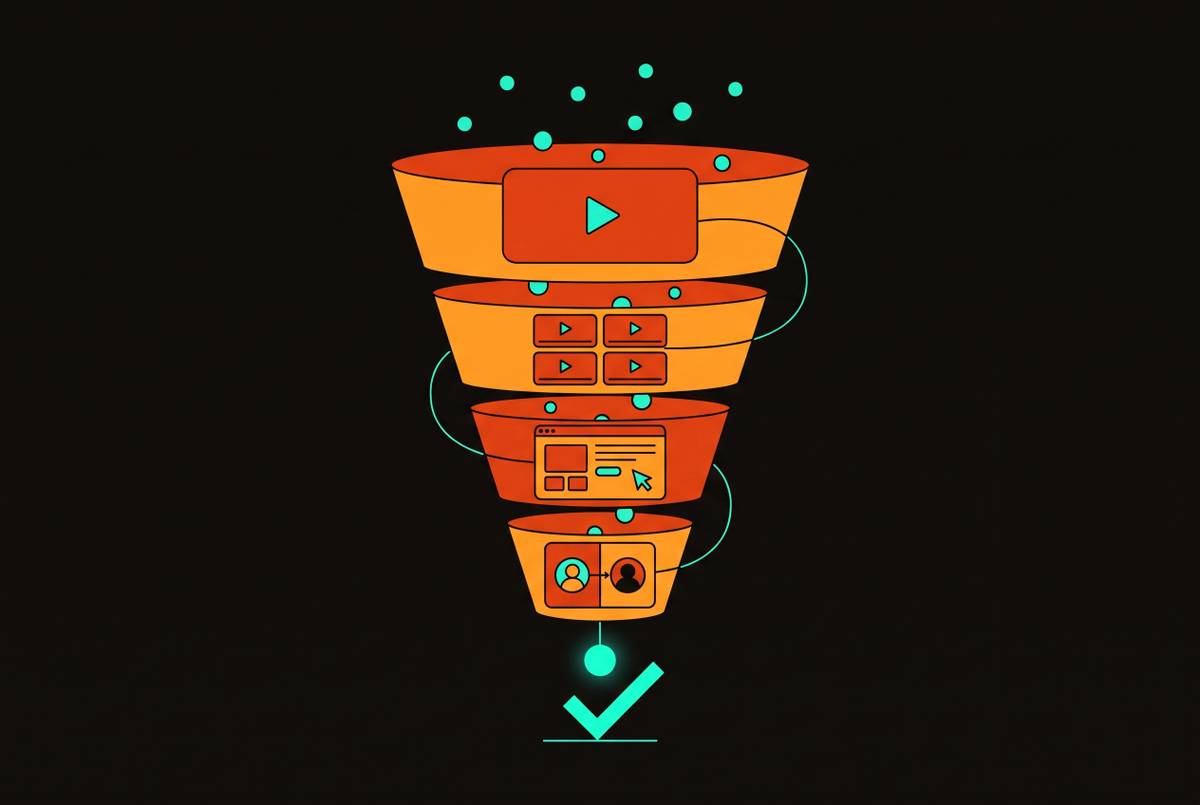
The buyer can simply keep looking, without booking the call where someone might finally explain the difference. That is why the damage is not confined to a weak video completion rate. The rest of the funnel cannot repair confidence for a prospect who never enters it.
Four structural mistakes that explain why generic videos kill deals rather than just underwhelm
The first mistake is a feature tour where a buyer’s problem should be. Someone close to the product writes about everything it can do, assuming the viewer will connect those capabilities to a need. That leaves the buyer doing the translation. “Managing your workflow is hard” gives them little to recognize, while a team spending hours chasing status updates across five different tools describes a concrete frustration. A problem-first narrative earns attention before introducing the product, because the viewer already understands what the solution must resolve.
The second mistake is failing to choose who the video is for. A video that tries to explain everything to every possible buyer fills up with features but says little about what each buyer needs. Nobody gets a clear account of their situation. The concept is flawed, so flawless production cannot rescue it. The more the script avoids excluding anyone, the harder it becomes for a particular buyer to feel addressed.
The third mistake is giving every placement the same runtime. A three-minute homepage video asks too much of someone who is just browsing, while a fifteen-second product video leaves too little time to explain something complex. Neither duration works independently of its job. Wyzowl’s 2026 research reports that a majority of marketers consider short videos in the range of under two minutes most effective, but that does not make one short cut suitable everywhere. A homepage hero, paid social ad and sales follow-up need different cuts because the people watching them already know different amounts about the product.
The fourth mistake is treating the call to action as an ending added after the story is finished. The video explains something, then ends without leading the viewer to a next step. The viewer is left to make the handoff. A “start free” or “book a demo” prompt works as part of the structure when the script, visual and on-screen text all lead toward it. Without that alignment, the final five seconds can waste the interest the rest of the video earned.
Why AI-generated video and low-fi content are not the same objection
A founder speaking plainly on camera can outperform a slick explainer without disproving any of this. The founder may name the problem precisely and explain the product in language the buyer recognizes. Being specific makes it work, and spending more to make the video does not guarantee that.
AI-generated footage introduces a separate trust risk when viewers recognize it as a shortcut in a company-facing asset. On a landing page, that impression can reinforce the same concern a generic template creates, namely that the product received the same treatment as its introduction. But generated footage and AI-assisted personalization are not the same use. Personalization can connect a product story to a recipient’s context, while generic footage can leave the story untouched. Even a video that looks finished needs to show that the company knows its product and its buyer.
What a differentiated SaaS video actually contains, and where the specificity comes from
Zendesk illustrates the central distinction in organizing logic. The buyer’s scenario, rather than the product’s feature inventory, gives the explanation its shape. The scenario establishes what needs to happen, so the capabilities appear as answers. This changes what the buyer has to interpret. They can judge the product against a situation they understand rather than trying to assemble a use case from a tour.
Making that clear starts with the script, before polish can help. A strong opening states a pain or shows a result visually, giving the viewer something concrete to recognize. It does not spend its most valuable seconds warming up. The question of what the viewer should feel by second fifteen forces a choice about what belongs in the explanation. Deep product knowledge makes that choice possible, because explaining only what someone needs at this moment requires knowing what can safely be left out.
The visual treatment then gives that story a form suited to the brand. The “Confident” style uses flat compositions, minimal animation, glassy UI and calm music, sometimes mixed with live action, for companies moving upmarket or selling to teams and enterprises. Wix Studio and Base44 pioneered that approach, which depends heavily on tasteful design. By contrast, the “Minimal” style associated with OpenAI and Harvey AI uses near-sterile black and white with no effects. It works for category leaders whose names already carry weight, but rarely draws people in on its own. Neither style substitutes for a reason to watch.
Real UI and motion that echoes how the software moves give the explanation a visual connection to what is being sold. A template’s floating icons cannot make that link. The chosen visuals should support the product story, with only the screens needed to do so. Style follows the explanation.
The buyer’s stage also changes the finished video. A problem-solution narrative earns attention on a homepage or in a paid campaign, where the audience may know little about the product. An interactive feature walkthrough serves someone already comparing how well it handles their specific needs. Customer success stories do a different job again. Authentic footage of real users speaking in their own words, combined with motion graphics for context, can supply credibility that a polished testimonial struggles to earn.
What happens when personalized, specific video replaces generic at the sales sequence stage
Qwilr used personalized videos for people in specific industries and those who signed up for a trial to show what its software could do with proposals. The proposal software company saw a substantial increase in reply rates and moved several prospects into its sales pipeline. The content had a defined recipient and purpose. Instead of broadcasting the same product introduction, it connected the capabilities to the audience receiving them.
Brikl started using personalized video for sales prospecting with Dan Vermont as Head of Operations. It saw a substantial increase in response rates and a meaningful boost in email engagement. Specific answers did not require starting over each time. The team built a library of pre-recorded responses to common customer questions, giving it a way to respond to particular needs without making every video from scratch.
Warmly, a revenue orchestration platform, used AI-personalized video to get back in touch with buyers from closed-lost opportunities. It closed a substantial sum in ARR in a single month, with engagement increasing meaningfully compared with standard email. At HubSpot, one rep’s success with video outreach led the rest of the team to use it, after which booked meetings rose sharply. These cases extend beyond passive viewing. The reported outcomes concern replies, pipeline, revenue and meetings, which connect the video to the work of selling.
The shared variable is a story translated into the recipient’s context. That becomes especially useful when a buyer is comparing vendors directly and needs more than a broad introduction. A generic video at this stage can suggest that the company has not understood the situation. A specific one can explain the fit before a rep gets on a call, using the same principle as a strong homepage explainer but answering a more developed buying question.
What to audit in your current video before concluding that video doesn't work for your product
A weak result may establish that this video gave buyers no reason to act. View counts alone cannot settle that question, because attention and sales progress are different outcomes. Demo-call conversion rate, sales-cycle length and trial-to-paid activation put the evaluation closer to the job the asset was meant to do.
The first diagnostic question concerns the opening. Does it name a problem that a specific buyer has, or start with features and the company’s history? Starting with those usually points to an inside-out script. The second question concerns recognition, namely whether a defined audience would see its situation in the video. “Anyone who needs to manage workflows” gives the story no useful boundary, while “ops leads at 50-person SaaS companies who’ve outgrown spreadsheets” identifies someone the explanation can actually address.
Third, a suitable runtime depends on the placement. A homepage hero, paid social ad and sales follow-up email should not require the same level of patience or prior knowledge. Fourth, the visuals should show the product as it is, with real UI, motion that matches how the software moves and a style chosen to fit the brand. Together, these questions show whether the people who made the video knew the product or just fitted it into a template.
That distinction also changes how its return is judged. A well-made explainer can make sales calls shorter, bring in more trial sign-ups and give the team material to use in ads, decks and onboarding for years, with cuts that fit each placement. Its value is not confined to the homepage. The final diagnostic is whether the asset gives a specific buyer the understanding needed to move forward wherever it appears. A first salesperson that does that can keep earning its place throughout the buying journey.