How B2B SaaS Companies Use Video at Each Pipeline Stage
Matching each video to one buyer action makes it count in pipeline.
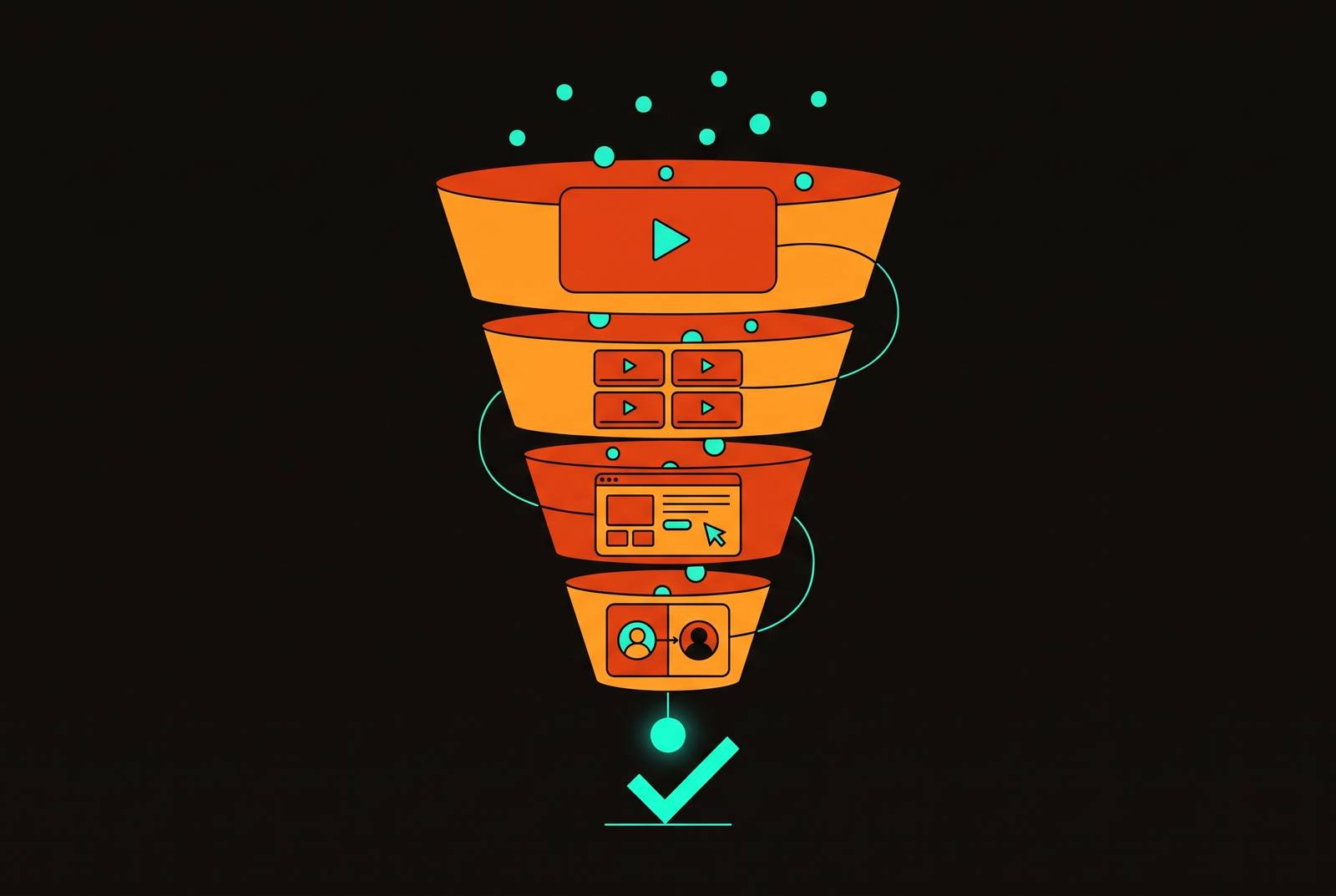
B2B SaaS companies use video well when each asset helps a buyer take a specific action at a specific pipeline stage. An awareness clip gets attention, an evaluation video shows that the product fits, and a decision-stage video helps a champion get internal approval. The right format, channel, and metric follow from that job. Without those choices, more video means a bigger archive.
Why most B2B SaaS video programs produce content but not pipeline
View counts look good until sales asks which of those views led to opportunities. Then the gap becomes hard to explain. The hosting platform reports plays, but the revenue team needs to know whether a buyer moved closer to a decision. Those are different data points. When a video has no assigned stage, buyer action, or route into the CRM, its performance says little about pipeline.
That gap starts before production. A team commissions an explainer without naming the obstacle it should remove, then tries to connect it to deals months later. The resulting library may be polished and widely watched. Yet nobody can defend which clips helped sales, because the program never defined what help would look like.
The audience mismatch makes the problem worse. A champion needs to understand the product and explain it internally, while an economic buyer wants evidence of risk and return. A technical evaluator needs proof that the product works in a real environment, and a security reviewer needs answers about controls and compliance. These are different questions, and a single hero video cannot answer all of them well.
What pipeline-first video actually means: one stage, one action, one metric
Assign every asset one stage, one buyer action, and one primary success metric before writing the script. Decide how its engagement will reach the CRM at the same time. Video can earn awareness, capture a lead, support a sale, or drive expansion. The brief needs to choose a job. That choice gives the format, distribution channel, and measurement plan something concrete to answer to.
Pull the last 20 closed-won and 20 closed-lost deals, then identify where they sat longest. A technical-review bottleneck calls for an architecture walkthrough, while losses to better implementation support call for an implementation confidence video. When a buyer goes quiet after a proposal, a video the champion can forward internally can help. Build first against the objection killing the most deals.
Attribution belongs in that brief because access and tracking are linked. A public or unlisted URL reports a play event, while a signed, per-recipient link can tie engagement to a specific contact and opportunity. Treating them separately leaves marketing and security solving parts of the same problem without a shared plan.
Top of funnel: short-form video that earns attention before the category search begins
An awareness-stage buyer is forming a view of the problem. The useful video therefore teaches something about the category or gives a clear founder point of view. Short teaching series, expert explainers, trend analysis, and thought-leadership clips can all do that job. A demo arrives too early for this buyer. The practitioner or future champion first needs to decide whether the problem is real and worth solving.
Distribution follows that state of mind. LinkedIn organic reaches practitioners who are viewing content about their work but may not be looking for software. Native video can get more engagement than a single static image, though it gets less than multi-image posts and native document carousels. Video’s role here is to make a useful idea easy to watch and understand.
YouTube serves a different route into the same stage, with search-driven discovery, longer dwell time, and a library whose value can compound as it grows. Reach, watch time, and new audience growth are useful candidates, with one chosen as the asset’s primary metric. None proves that a deal is about to close. Judging an awareness clip by demo requests makes it look unsuccessful for failing to do a job it was never built to do.
Middle of funnel: proof-heavy formats built for a buyer who is actively comparing vendors
Once the buyer starts comparing vendors, more category education is not enough. Product walkthroughs, technical deep dives, customer proof clips, and webinars now have a clearer purpose. They must show that the product works for someone like the buyer and answer real objections. The standard shifts from interest to evidence.
Different people within the account may need that evidence at the same time. The champion needs a cut that builds internal confidence, the technical evaluator needs integration and architecture detail, and the economic buyer needs a case for risk and return. A generic overview blurs those distinctions. Webinars are especially useful here because they combine product demonstration with live objection handling and produce a contact record with stated intent.
Distribution moves toward product pages, email nurture sequences, paid retargeting, and sales outreach. Reps can use CRM templates with videos matched to each deal stage, so they do not have to pick a clip from memory. Product demos of two to five minutes suit this stage, while embedded forms and clickable calls to action give interested buyers a way to respond. The viewing session can now support a next step.
Measurement should follow that step through demo request rate, time-on-page, or sales-cycle length. Contact-level engagement also needs to enter the CRM as a scored signal. A rep needs to know which prospect watched a walkthrough and how far they got.
Bottom of funnel: the video the champion forwards internally when the rep is not in the room
The most valuable decision-stage video may be the asset the champion forwards to a skeptic who never joined a call. That person needs a case that stands on its own, without the rep supplying missing context. Another product overview rarely fills that gap. The video must answer the question that is holding up approval.
Those questions are specific. Finance needs cost and payback, IT and engineering need integration depth and API detail, and security needs audit logs and compliance answers. Customer proof, ROI stories, and security and integration overviews give the champion different forms of evidence to share. Testimonials and case studies help resolve doubt through the experience of buyers who have already committed. Where implementation support has cost deals, a video showing the actual onboarding process and timeline addresses that concern directly.
Proposal links, sales email sequences, and champion-shared links are the distribution channels here. Recipient-level attribution can tell a rep that a finance buyer watched an ROI story and for how long. The goal is attributable engagement without making the champion struggle to circulate the case.
Close rate and proposal-to-close cycle time show whether these assets help decisions move forward. Their usefulness depends on what happens beyond the sales conversation. The decisive audience may never meet the rep, so the champion needs evidence that works without one.
Sales outreach: one-to-one personalized video as a reply-rate lever, not a novelty
Outbound video runs alongside the funnel and can work at more than one stage. A rep uses a personal message to build rapport and explain a complex product visually without asking the buyer to attend a meeting first. Its value is measurable through replies and meetings booked from video-first sequences. Novelty is not the success metric here. A successful message earns a response that generic outreach did not.
AI tools change the recording workload. HeyGen lets a rep record a base video and generate variants with a lead’s name and company inserted through dynamic variables, with matching lip movements. Vidyard uses AI Avatars and CRM-driven keyword replacement in scripts for names and companies, but does not generate spoken name-pronunciation variants. Tavus also uses a template-plus-variant model to make personalized sales video. As of April 2026, it has pivoted to a developer-first Conversational Video Interface platform, with asynchronous personalized video remaining a secondary product line.
With less to record by hand, personalized video becomes practical at mid-market volume as well as for high-value enterprise deals. Even a small rise in reply-rate can help a rep who has a large named-account list and a first-meeting quota to meet. The emerging direction goes beyond generating variants. Agentic workflows monitor signals across the CRM and data stack, then generate and send personalized video automatically. This developing approach still needs to be judged by replies and meetings, with widespread adoption yet to be established.
Post-sale video: onboarding and feature adoption as churn prevention, not afterthought content
New customers face the work of learning a tool, and early onboarding is a key point of churn risk. Video can make that work easier by pairing spoken guidance with visuals that show what is being explained. Onboarding video should help customers use the tool sooner. SundaySky reports less early-life churn and faster time to value among customers who use personalized onboarding video, drawing on results across its enterprise customers without naming a single case.
Feature-adoption video extends that job beyond signup. When a feature goes unused, the customer misses out on the value they expected, so adoption matters for retention. A walkthrough at release can remove the learning barrier before it becomes a reason to cancel. AI video tools also let Customer Success teams produce onboarding walkthroughs and feature explainers without studio resources.
A centralized library keeps Sales and Customer Success working from the same product explanation. The demonstration used to close a deal can support a tutorial that helps the customer activate, rather than forcing the buyer to start over at handoff. The post-sale asset still needs to serve its own action, with time-to-value, feature adoption rate, or user retention as its primary measure.
Expansion revenue and reduced churn are revenue outcomes. To connect them to the wider system, post-sale engagement must flow back into the CRM. Signals showing who watched, who stalled, and which feature walkthrough was replayed give Customer Success visibility before renewal discussions. Onboarding then feeds the same infrastructure that tracks deal attribution.
The measurement scorecard that keeps a video program alive past the first planning cycle
When buyers take time over a B2B purchase, video rarely gets clear last-click credit. Closed revenue may take weeks or months to appear, so the people funding the program need that expectation upfront. While they wait, the monthly scorecard must show leading signals and what sales is doing. Budget reviews need more than view counts. They need enough evidence to decide whether to scale the program or adjust it.
Each asset should have one primary metric, selected for its job. Awareness can use reach, watch time, or new audience growth, while evaluation can use demo request rate, time-on-page, or qualified leads from gated assets. At the decision stage, the scorecard can track proposal-to-close rate, influenced pipeline, or champion-forwarded engagement. Outbound needs replies or meetings booked, and post-sale needs time-to-value, feature adoption, or early-life churn. These are choices for a short scorecard.
The supporting data comes from different places. LinkedIn and YouTube native analytics show early audience engagement, forms connect evaluation assets to contacts, and signed per-recipient links support attribution during sales and decision stages. Anonymous reach is still a leading signal. Where viewers are known, their engagement needs to reach the CRM at contact level. Over-gating shared decision assets or leaving known-buyer engagement as aggregate analytics breaks that connection.
The next brief should follow the evidence. Patterns in closed-lost deals show which objection to address, and knowing the product helps make a video with details that hold up when someone checks its technical claims or forwards it internally. A more targeted asset then produces a cleaner signal about whether that obstacle moved. That signal strengthens the next budget case and guides the next production choice.