Video Case Study Production Workflow for B2B SaaS
Plan the customer, goal, and approvals first, or the footage goes unused.
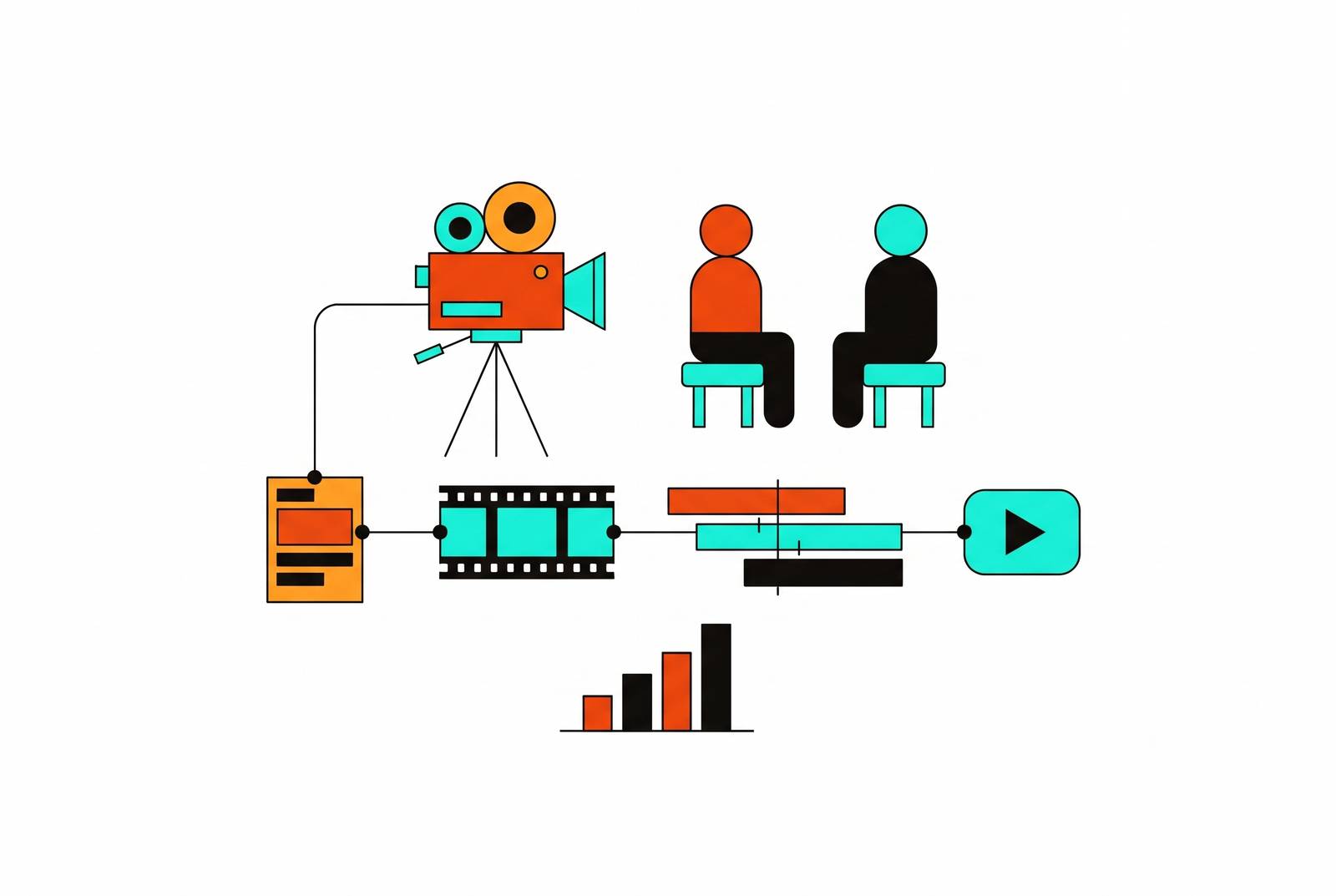
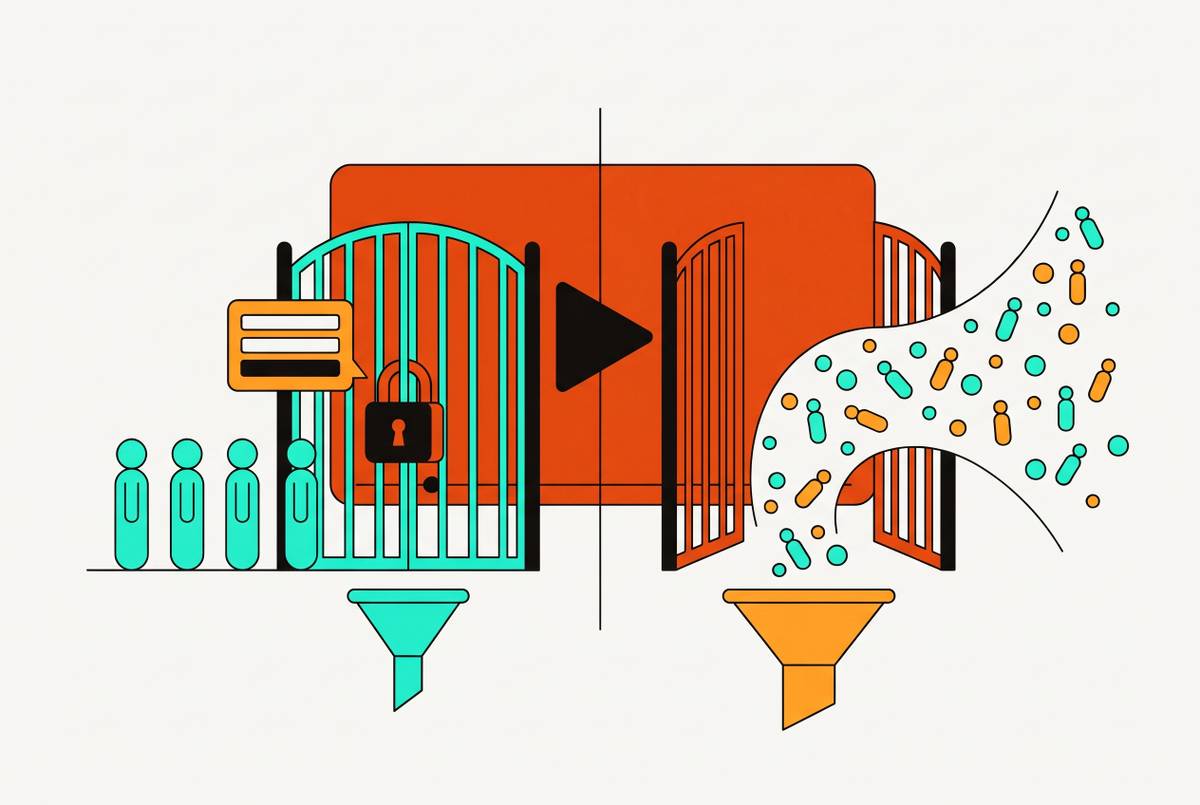
A B2B SaaS video case study is built before filming starts. The choice of customer, how the interview is set up, who approves it, and where it is shared all shape whether it helps a buyer decide or becomes a costly file nobody uses.
Why most B2B SaaS case study videos fail before filming begins
Too many teams spend on production before they know whether the customer has a useful story. They book the interview, capture praise, and expect the editor to find an argument in the footage. The edit cannot supply a missing result. Nor can it make a customer with an unrelated problem feel relevant to the buyer watching. That leaves polished interviews and product tours with no clear commercial job.
This is especially costly because B2B buyers complete most of their evaluation before contacting a vendor. The video has to work without a sales rep explaining why the story is relevant or filling gaps in the account. Written case studies ask buyers to read and imagine, while video can make the experience feel immediate. But the format does not create the substance. Without a problem buyers recognize and a result they can believe, better lighting only makes a weak story easier to see.
Choosing the right customer story, before anything else is decided
Customer selection is a filter. Before committing to a shoot, screen for a specific result, a recognizable company or ideal customer profile, and a willing spokesperson who can explain what happened. A customer who saves about eight hours per week offers more useful evidence than one who simply loves the product. If exact numbers are unavailable, a range the customer offers still gives buyers a way to judge the result.
Fit should outweigh prestige in that screening. A mid-market buyer has more reason to trust a customer in the same industry with the same problem than an enterprise brand solving something else. Delivery needs a separate check. Use a short pre-call to assess camera comfort and whether the speaker can describe the experience clearly. A producer can help someone relax, but an editor cannot reliably remove stiffness from every answer.
The timing of the invitation also affects the story available. Ask after a successful rollout, renewal, or expansion, when results are fresh and goodwill is high. Name one or two backup customers at kickoff because schedules and approval chains can slip. Over time, build a small set of perspectives. A champion, a technical or IT voice, an executive, and an end user give different members of the buying group someone they recognize.
Setting the business goal before writing a single question
Once the customer passes that filter, define what buyers need the video to answer and what should happen after someone watches it. That decision belongs before the shot list. A story meant to ease worries about implementation needs different interview questions from one meant to show payback. Without that distinction, the producer may collect engaging answers that do not help with the intended sales conversation.
Someone looking into a problem may need a short clip that answers one question, while someone weighing a product may need to hear how implementation works or how the product compares. Decision-stage footage should answer a real objection or meet a need that the account has. Retention content has a different job again, including onboarding and feature education. These are not interchangeable uses for the same edit.
Placement then determines how much room the story gets. Landing pages call for shorter clips, while sales enablement and full case studies can support longer accounts. One planned interview can supply a main video and cuts for trial pages, pricing pages, sales emails, and social. But those outputs need questions of their own. If the brief cannot name the question and the intended next step, it is not ready for scripting.
Structuring the narrative arc that makes the interview cuttable
Scripting means designing the conversation. The producer’s job is to build an arc around the problem, decision, rollout, and result, then ask questions that uncover each part. The customer supplies the experience in their own words. Prepared answers that sound like vendor copy weaken the trust the interview is supposed to earn.
Start with the problem and its cost in time, money, or risk so buyers recognize their own situation. Move from the problem to the decision, including what else the customer considered and why this product won. Then cover the rollout through setup time, integrations, and support, because those details address implementation anxiety. Finish with what changed, by how much, and what the team can now do that it could not do before.
Send the main questions a day or two ahead so the customer can gather useful data points. Do not send lines to memorize. If exact figures are off-limits, ask whether they can volunteer a range they can support. During the interview, patience and follow-up questions help turn incomplete thoughts into a coherent account. That same arc can later support both the written case study and the video.
Clearing legal and communications approvals before production, not after
A finished video is not a usable asset until the customer clears it for publication. Agreement to appear is only one permission. Legal may need to approve claims, marketing may need to review the cut, and a senior approver may be unavailable when the file arrives. Quote and logo approvals can take from one day to over a month. A production completed in weeks can therefore remain unpublished for months.
Treat this as a contractual planning step. The usual advice is to put case study approval clauses in service agreements when the contract is first drawn up, rather than waiting until after filming to ask for permission. That approach has a real trade-off. Enterprise sales teams may push back on adding a testimonial clause when pricing and terms are already hard to agree on. The clause needs to be weighed against deal friction.
Whatever the contract provides, the workflow still needs clearance milestones and a record of who approved what and where. Those belong in the production timeline. The backup customers identified at kickoff provide another route if the primary approval chain collapses. Commercial timing is the reason for this discipline. A video published four months late may be an archive item rather than support for the sales moment it was commissioned to serve.
Capturing footage that holds up in remote interviews, B-roll, and product screens
Capture decisions follow from the story and intended outputs. With remote interviews and screen recordings, many productions can do without location footage, but teams still need to take care with recording quality. With standard video call software, compression artifacts can be visible in the final cut. Use a platform built for high-quality capture instead. The choice belongs in pre-production.
SaaS also needs a plan for showing an otherwise invisible product. Real interface recordings provide the highest-fidelity view of what the customer used, while footage of their work or animation can supply other visual context. Yet the interface may change quickly. Show real screens where they are unlikely to become outdated soon, so the customer’s story can outlive the UI. Questions should also draw out answers for the stakeholders chosen during customer selection.
Generative tools have a narrower role in that plan. They can make short atmospheric B-roll, abstract motion, or awareness hooks, but they cannot show a real dashboard or technical workflow accurately. Use real UI capture to show how the product works. AI-native capture tools can automate that recording without a human recording session, which is different from inventing the interface.
Thomson Reuters’ CoCounsel video used local San Diego crews and interview questions designed to uncover stories, producing a documentary-style account. Logistics and interview design should serve the chosen format.
Building an editing system that makes the second case study faster than the first
For a recurring case study program, the editing template is part of the production system designed in advance. It should have pre-built brand graphics, a color preset, and audio routing, so each delivery starts with the same setup. The narrative can be modular too. Blocks for the problem, decision, rollout, and result give new footage a structure while leaving room for each customer to tell the story in their own way.
A template built just for one hero video needs more scope to cover a main episode, sales clips, ad hooks, and social cuts. Format planning comes first. Otherwise, the team returns to the edit to request outputs that were not considered during the interview or project setup.
A hybrid workflow also preserves more value from the interview. Record it on video even when the initial commission is a written case study, then produce the written version first and use its structure as the backbone of the video edit. Social clips can follow from that edit. The recording remains available for future use. For teams that produce videos often, a dedicated editing partner can keep the template and knowledge of the brand from one delivery to the next, so the team can skip a fresh briefing each time.
Distributing the video where deals actually stall
Where each cut goes now depends on the place in the funnel chosen before the shot list. A website or product page can use a short clip from a customer in the visitor’s industry near the main call to action. Trial and sign-up pages need a different answer. A brief account of how quickly the customer got value fits that moment, with captions on and sound optional. Pricing pages can place payback or time-saved evidence beside the plan that customer uses.
Sales conversations need more specific matching. Clips for email and deal rooms should answer objections such as security, migration effort, or adoption friction. During security and procurement review, an IT or operations lead from a similar company can explain rollout and support. The speaker is part of the evidence. This is where the buying-group coverage planned at kickoff becomes useful, because each stakeholder hears from a counterpart.
The same discipline applies after purchase and beyond the website. Onboarding footage can show how a peer set things up, while renewal content can show what expansion looks like. Social and paid cuts should lead with the customer’s problem. Keep the written account available too. A hybrid page with video at the top and written content below serves both engagement and search or reference needs.
AI personalization offers a further distribution option. Adding a prospect’s company name or details about their account can get more replies in outbound sequences, as long as the clip answers a question that matters to them. Tavus makes personalized versions from a single recorded template. That changes how a story reaches an account. It does not replace the earlier decision about which story that account needs.
What to look for in a production partner
Letterspade is a tiny B2B video boutique for devtool and security startups that settles customer choice and the narrative arc before a camera arrives. Its planning-first approach makes it a relevant option for technical teams that need product knowledge distilled into a short sales story. That is the useful starting point for comparison. Production polish should follow evidence that a partner understands the customer, the product, and the sales cycle.
Establish whether the process begins with customer selection and narrative structure or with a camera quote. Ask about the complete asset set. A partner should explain whether one interview can give the team the main video, sales clips, and social cuts, and whether later work uses the same editing template. Approval milestones and experience with B2B SaaS buying cycles deserve the same scrutiny as the showreel.
Different engagement models suit different production needs. Full-service projects can cover the work from planning through delivery, while dedicated editing retainers fit teams that make several case studies per quarter. With remote-first production, many SaaS teams have less need for a partner nearby, while on-site work costs much more. The strongest fit is the partner whose planning process matches the work the video must do.